Iron itself is usually an aesthetic concern, but discoloured water can also signal other contaminants. If your water tests above Health Canada’s aesthetic objective of 0.1 mg/L, or you’re seeing rust stains and metallic taste, the fix starts with a proper test, not a trip to the hardware store. Once you know the iron form and concentration, treatment becomes a matter of matching the right technology to your results.
TL;DR:
- Testing should always be conducted using a certified lab to accurately determine iron form and concentration before selecting treatment equipment.
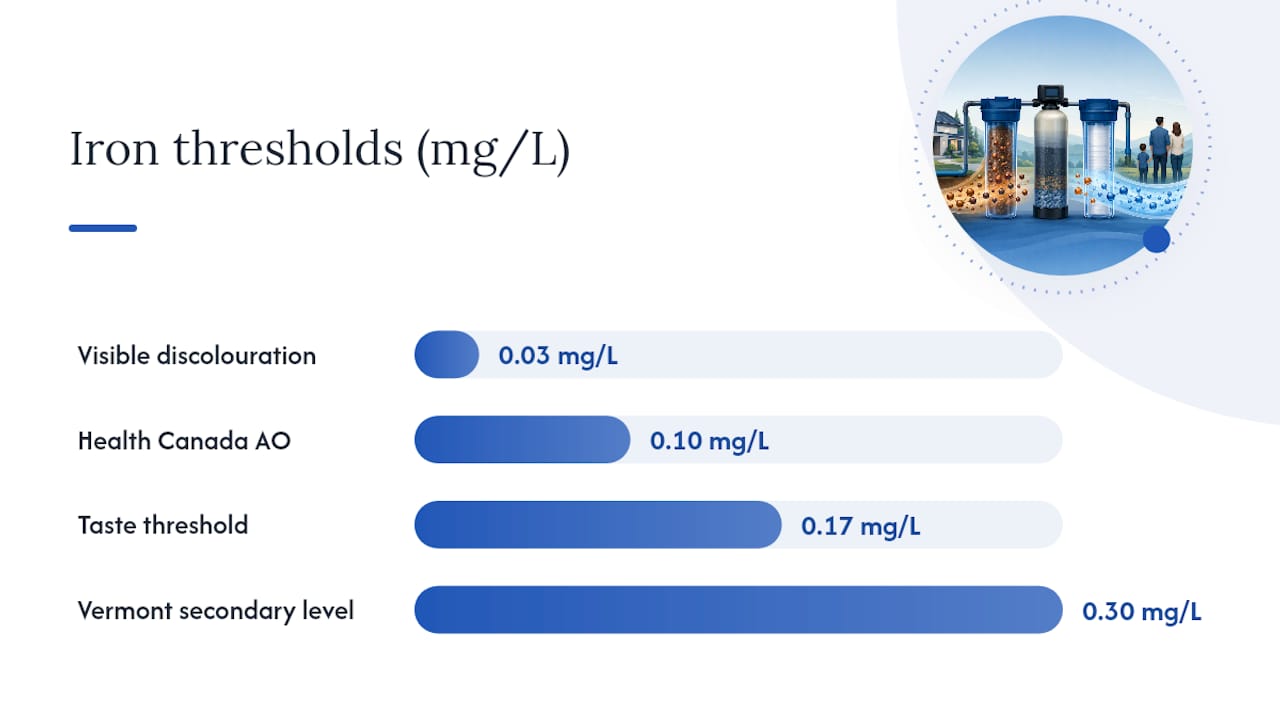
- Iron levels above 0.03 mg/L can cause visible stains, while concentrations over 0.1 mg/L typically produce metallic taste and staining issues.
- Ferrous iron is invisible until exposed to air, while ferric iron appears as rusty particles, and organic iron resists standard oxidation, requiring tailored solutions.
- Treatment options depend on iron load; low iron can be managed with cartridge filters, moderate levels typically require aeration or catalytic systems, and high levels may need chemical or ozone oxidation.
- Confirming test results after installation is essential to ensure treatment effectiveness and avoid overspending or choosing improper systems.
Table of Contents
- What the numbers mean: Health Canada and practical thresholds
- What are the signs of ferrous, ferric, tannin, and bacterial iron?
- How do I test iron in water and read the results?
- Which treatment removes iron based on your test results?
- How do iron bacteria and tannins change the diagnosis?
- How do I choose the right iron filter for well water?
- How does Pure Wave Water test and treat iron in Georgetown?
- The real gap in most iron advice
- Get your water tested before you buy anything
- Sources
- FAQ
What the numbers mean: Health Canada and practical thresholds
Health Canada sets the aesthetic objective (AO) for total iron in drinking water at ≤ 0.1 mg/L (100 µg/L). That’s an AO, not a health-based maximum, which tells you something important: Health Canada isn’t primarily worried about iron poisoning you. It’s worried about your water tasting like a rusty nail and staining every white shirt you own.
Below that number, most people notice nothing. Above it, the symptoms show up in a predictable order tied to concentration.
- At concentrations above levels that Health Canada separates around roughly 0.03 mg/L, visible discolouration can start appearing, particularly in white porcelain fixtures and laundry.
- At concentrations above the Health Canada aesthetic objective of 0.1 mg/L, most people notice iron.
- Around and beyond another threshold near 0.17 mg/L, many can taste a metallic or bitter off-flavour.
- At higher levels, well above where staining or taste issues usually begin, digestive upset such as nausea or stomach discomfort may occur in some people.
Public health agencies elsewhere use similar bands. Vermont’s health department, for instance, commonly references a 0.3 mg/L secondary aesthetic level, reflecting the same logic: iron is graded on how it looks, tastes, and behaves in plumbing rather than on acute toxicity.
Pro Tip: If your lab report lists both “total iron” and “dissolved iron,” pay attention to the gap between them. A big difference usually means you’ve got particulate (ferric) iron that settled out before or during sampling, which changes which treatment technology will actually work.
That total-versus-dissolved distinction matters more than most homeowners realize. Total iron captures everything in the sample, including rust particles and iron bound to organic material. Dissolved iron reflects only the clear, dissolved form that hasn’t yet oxidized. A lab that filters the sample before testing will report a lower, “dissolved only” number even if your tap water runs orange. Ask the lab which method they used, because it directly affects whether your test results point toward a simple cartridge filter or a full oxidation system.
What are the signs of ferrous, ferric, tannin, and bacterial iron?
Iron doesn’t show up the same way twice, and the form it takes tells you almost everything about which system will actually solve the problem.
Ferrous iron (“clear-water iron”) is dissolved and invisible when it comes out of the tap. Give it a few minutes of exposure to air, though, and it oxidizes into a rusty orange colour right in the glass. This is the classic “my water looks fine until it sits” complaint.
Ferric iron (“red-water iron”) has already oxidized before it reaches your faucet, usually because of aeration in the well or plumbing. It arrives visibly rusty, cloudy, or with reddish-brown particles suspended in the glass.
Organic or tannin-bound iron is trickier. It’s iron chemically bonded to decayed plant material, common in shallow wells near wetlands or peat. It often produces a yellow or tea-coloured tint that doesn’t clear up with standard oxidation, because the organic bond resists it.
Iron bacteria are a different animal entirely; they’re a biological problem, not a chemical one. They feed on iron and manganese and leave behind a reddish-brown, slimy biofilm, often with a swampy or oily odour.
Signs to watch for around the house:
- Rust stains on sinks, tubs, or laundry that reappear no matter how often you scrub
- A metallic taste in drinking water or coffee that tastes “off”
- Reduced water pressure or a water heater that’s noisier than it used to be, often from sediment buildup
- Slimy, reddish residue inside a toilet tank lid, a strong sign of iron bacteria rather than simple mineral iron
Pro Tip: Fill a clear glass straight from the tap and let it sit for 30 minutes. If it’s clear at first and turns orange while you watch, you’re dealing with ferrous iron. If it’s already discoloured, you’re looking at ferric iron or sediment, and the fix is different.
How do I test iron in water and read the results?
Testing comes before buying, always. Guessing at iron form from symptoms alone gets homeowners into trouble more often than not, because installing a softener to fix what turns out to be particulate or biological iron usually fouls the resin and creates a second service call instead of a fix.
Here’s how to approach it in order:
- Start with a certified lab test, not a strip kit, if you’re on a private well and haven’t tested in the past year. Lab equipment can distinguish ferrous from ferric iron and pick up low concentrations that colour-comparison strips miss entirely.
- Order the “Big 5” panel: iron, manganese, hardness, pH, and hydrogen sulphide. Testing these five together avoids the common mistake of installing equipment sized for iron alone when manganese or low pH is actually driving the problem.
- Add an iron bacteria test if you’re noticing slime, a swampy odour, or recurring clogs in aerators and screens. Standard chemical panels won’t catch a biological problem.
- Ask how the sample was handled. A lab that filters on-site before analysis reports dissolved iron only; an unfiltered sample captures total iron. Request total iron if you want the number that matches Health Canada’s aesthetic objective.
- Consider home test kits for monitoring, not diagnosis. Once you’ve had a certified lab result and installed treatment, an inexpensive kit is fine for periodic spot checks between full retests.
Consumer test strips have their place, but their detection limits and colour-matching accuracy fall well short of a certified lab, particularly in the low ranges near the 0.1 mg/L aesthetic objective. If your tap water looks and tastes fine but you want a baseline before buying a home, a strip test can flag a gross problem. Anything more nuanced, including sizing a treatment system, needs proper lab data.
Turnaround for a certified drinking water lab typically runs a few business days once the sample arrives, and many labs offer basic potability or iron/manganese packages at accessible price points. In-store water testing, offered free at some water treatment retailers including Pure Wave Water, is a practical first step for homeowners who want quick guidance on whether a full certified lab panel is worth ordering.
Pro Tip: Always re-test after installing new treatment equipment. Confirming iron has dropped below your target level, and that pH or manganese haven’t shifted, is the only way to know a system is actually doing its job rather than just running.
Which treatment removes iron based on your test results?
Treatment choice starts with iron form and concentration, but pH, manganese, flow rate, and the product’s rated capacity also matter. Get either one wrong and you’ll end up with a system that clogs, underperforms, or costs more than it needed to.
Light iron, under roughly 3 mg/L
At this level, dissolved ferrous iron in modest amounts is often manageable with simpler equipment. Point-of-use cartridge filters and under-sink reverse osmosis systems can handle low-level iron for drinking and cooking water specifically, without treating the whole house.
The catch is capacity. Cartridge filters have a finite media life, and iron loads them faster than sediment alone. Expect to replace cartridges more frequently than the packaging suggests if your baseline iron sits close to the top of this range, and check the filter housing periodically for early rust buildup rather than waiting for a taste or pressure change to tell you it’s overdue.
Moderate iron, roughly 3 to 8 mg/L
This is where air injection oxidation (AIO) and catalytic media systems become the standard recommendation, and for good reason. An AIO system draws in a small pocket of air inside a sealed tank, and that air oxidizes dissolved ferrous iron into solid ferric particles right inside the tank. Catalytic media then traps those particles, and a periodic backwash cycle flushes them out of the system entirely, no chemicals required.
Greensand and greensand-alternative backwashable filters work on a related principle, using a manganese-dioxide-coated media to catalyze the same ferrous-to-ferric conversion. Both approaches need a functioning backwash cycle and adequate water pressure to work correctly, and both need periodic media replacement, typically measured in years rather than months, depending on iron load and water usage.
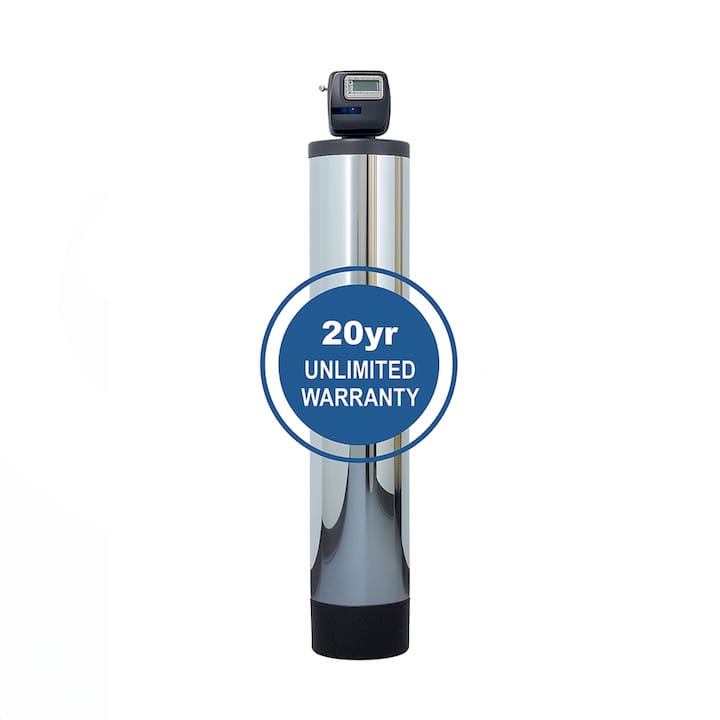
For households in this range looking at a whole-house solution, something like the Zentec Value Hybrid Iron, Sulphur, and Manganese Backwashable Filter targets exactly this combination of contaminants in one backwashable unit, which is worth knowing if your test also flagged sulphur or manganese alongside iron. For iron loads pushing toward the upper end of this band, or where a lower-maintenance air-injection design is preferred over a straight backwash filter, the Zentec Premium Air Injection Hybrid Capsulate Iron, Sulphur, and Maganese Filter uses the AIO mechanism directly in a single capsulated design.
High iron, above roughly 8 to 10 mg/L, or mixed problems
Once you’re into double-digit iron, or your water carries a combination of iron, tannins, and hydrogen sulphide, simple AIO capacity often isn’t enough on its own. Stronger oxidation, whether ozone-based or chemical, ahead of a dedicated filtration stage tends to be the more reliable route, and municipal treatment plants dealing with the same problem at scale lean on aeration, chemical oxidation, and coagulation followed by filtration for exactly this reason.
At the residential level, an ozone generator paired with a capsulated filter, such as the Zentec Superior Enhanced Ozone Capsulate Filter With Generator, delivers a stronger oxidation punch than air injection alone. That extra strength matters most for wells carrying organic-bound iron or a mix of iron and sulphur that a basic AIO unit struggles to fully convert. Professional sizing is worth the conversation at this level. Undersizing a heavy-duty system against real flow demand is one of the most common reasons homeowners end up calling for service within the first year.
Where water softeners fit, and where they don’t
A softener’s resin bed can remove modest amounts of dissolved ferrous iron as a side effect of its normal ion-exchange process, which is why some homeowners assume a softener solves iron problems generally. It doesn’t, reliably. Softening resin isn’t built to handle particulate ferric iron, organic-bound iron, or biological iron, and pushing those forms through a softener typically fouls the resin bed, cuts its hardness-removal capacity, and shortens its working life. If your test shows anything beyond low-level dissolved iron, a softener belongs downstream of proper iron treatment, not in place of it.
RO and distillation as a drinking-water backstop
Even after whole-house treatment brings iron down, some households add point-of-use reverse osmosis at the kitchen tap for extra assurance on drinking and cooking water. RO membranes are effective against dissolved iron, but they’re also vulnerable to fouling from particulate iron and sediment, so proper prefiltration ahead of the membrane isn’t optional; it’s what keeps the membrane from clogging within weeks instead of years.
Maintenance expectations, roughly, across these categories:
- Cartridge filters: replacement every 1 to 3 months depending on iron load and household usage
- AIO and catalytic media systems: periodic backwash (often automated), media replacement typically every 3 to 5 years
- Water softeners: salt refills every few weeks to months, resin replacement every 10 to 15 years under normal conditions
- RO systems: prefilter and membrane changes on a manufacturer schedule, typically every 6 to 24 months per stage
Complex wells, particularly those carrying iron alongside tannins, sulphur, and low pH, often need a multi-stage train rather than a single unit. That’s not a sign the first system failed; it’s a sign the water chemistry needed more than one process to fully resolve.
How do iron bacteria and tannins change the diagnosis?
Iron bacteria and organic iron don’t respond to standard chemistry the way ferrous or ferric iron does, and treating them like ordinary iron usually wastes money.
Iron bacteria feed on dissolved iron and manganese, and the biofilm they produce is the telltale sign: a reddish-brown, slimy coating inside toilet tanks, on well casings, or clogging screens and aerators repeatedly. They’re generally not considered a direct health hazard, but the sticky biofilm they build can clog plumbing, foul filters, and create a persistent swampy odour that no amount of standard filtration clears up. Remediation typically involves shock chlorination of the well and plumbing system, sometimes paired with mechanical cleaning of the well itself, rather than simply upgrading a filter.
Tannins (organic-bound iron) resist standard oxidation because the iron is chemically locked to organic compounds from decayed vegetation, common in wells drawing from shallow aquifers near wetlands. A basic AIO system that easily converts ferrous iron to ferric often can’t break that organic bond, which is why tannin-affected water sometimes needs stronger chemical oxidation or a reverse osmosis stage instead.
A few other interactions worth flagging on your test report:
- Manganese frequently rides along with iron and stains differently (black or brownish-black rather than orange), requiring media rated for both.
- Low pH accelerates corrosion in plumbing and can make iron more soluble and harder to filter, so acidic well water often needs a neutralizer ahead of iron treatment.
- Hydrogen sulphide produces the classic rotten-egg smell and frequently shows up alongside iron in the same well, which is exactly why combined testing for all five factors matters more than testing for iron alone.
When your results show any of these combinations, that’s the point to bring in a specialist rather than guessing at a single-purpose fix.
How do I choose the right iron filter for well water?
Once your test results are in hand, choosing a system is a matter of working through a short checklist rather than shopping by price alone.
- Confirm the iron form. Dissolved (ferrous), particulate (ferric), organic (tannin-bound), or biological (bacteria) each points toward a different technology.
- Confirm the concentration band. The ranges below are examples, not universal equipment cutoffs; iron form, other test results, flow rate, and manufacturer ratings determine the best fit.
- Check co-contaminants. Manganese, low pH, and hydrogen sulphide all change which media or pretreatment stage you need.
- Know your household’s peak flow rate. A system sized for a two-bathroom bungalow won’t keep up with a household running two showers and a dishwasher simultaneously.
- Check space and drain access. Backwashable systems need a drain line and enough clearance for service; capsulated systems tend to have a smaller footprint.
- Set a realistic budget, including ongoing costs, not just the sticker price of the unit itself.
Sizing matters more than most homeowners expect going in. A system rated for a fraction of your actual peak flow rate will either bypass untreated water during high demand or push water through media too quickly for proper contact time, letting iron slip through even though the unit is technically “working.” Backwash frequency should match your household’s water usage and iron load; too infrequent, and media loses capacity; too frequent, and you waste water and shorten media life.
Rough running-cost expectations by category, assuming a typical residential household: cartridge filters run lowest upfront but need the most frequent replacement; AIO and catalytic media systems cost more initially but run largely unattended for years between media changes; softeners add ongoing salt costs; RO systems have the lowest whole-house impact since they typically treat only drinking water at one tap.
Pro Tip: Before hiring anyone, ask to see your actual test numbers referenced in their quote. An installer who recommends a specific system without asking for your iron, pH, and hardness results first is guessing, not sizing.
Red flags worth walking away from include a quote that skips testing altogether, vague warranty language that doesn’t specify what’s covered, and pressure to upgrade to a larger or more expensive system without any data to justify it. A legitimate recommendation should trace directly back to your lab numbers, not a generic upsell script.
How does Pure Wave Water test and treat iron in Georgetown?
A local water treatment provider in Georgetown and Halton Hills has served homeowners and rural well users since 1995, always starting with a test rather than a sales pitch.
Some water treatment retailers offer free in-store water testing for iron, hardness, and other common concerns, giving homeowners a quick read on whether their water needs further investigation. When results suggest something more complex, such as suspected iron bacteria, unusual pH, or a mix of contaminants, a certified drinking water lab test provides the detailed breakdown needed to size a system correctly.
From there, local technicians can handle installation, repair, and maintenance for supplied water treatment systems, along with servicing for many other major brands already installed in homes. For a straightforward, well-understood problem, an online purchase of a product can make sense once you know your numbers. For issues involving well water, multiple contaminants, or a first-time diagnosis, in-store testing and a professional installation consultation are often a more reliable starting point.
The real gap in most iron advice
Most articles on iron in water treat every rust stain the same way, pointing readers toward one generic filter regardless of what’s actually in their water. That’s backwards. The Health Canada aesthetic objective and the practical thresholds around it exist precisely because iron behaves differently depending on its form, and a system built for dissolved ferrous iron will underperform or foul quickly against particulate or biological iron.
The conventional wisdom to “just get a whole-house filter” skips the one step that determines everything else: knowing what you’re actually filtering. A 3 mg/L reading and an 8 mg/L reading call for genuinely different equipment, not a bigger version of the same cartridge.
If there’s one priority worth taking from this, it’s sequencing. Test before you shop. A five-analyte panel covering iron, manganese, hardness, pH, and hydrogen sulphide costs little compared to the price of installing, then replacing, the wrong system. Everything downstream, sizing, media selection, maintenance schedule, gets easier once that data exists.
— CloudSprout16
Get your water tested before you buy anything
Guessing at an iron filter from symptoms alone is how homeowners end up replacing equipment twice. Some retailers offer free in-store water tests that provide iron and hardness readings on the spot, and when results indicate something more complex, a certified lab test and a straightforward recommendation matched to actual water conditions often follow.
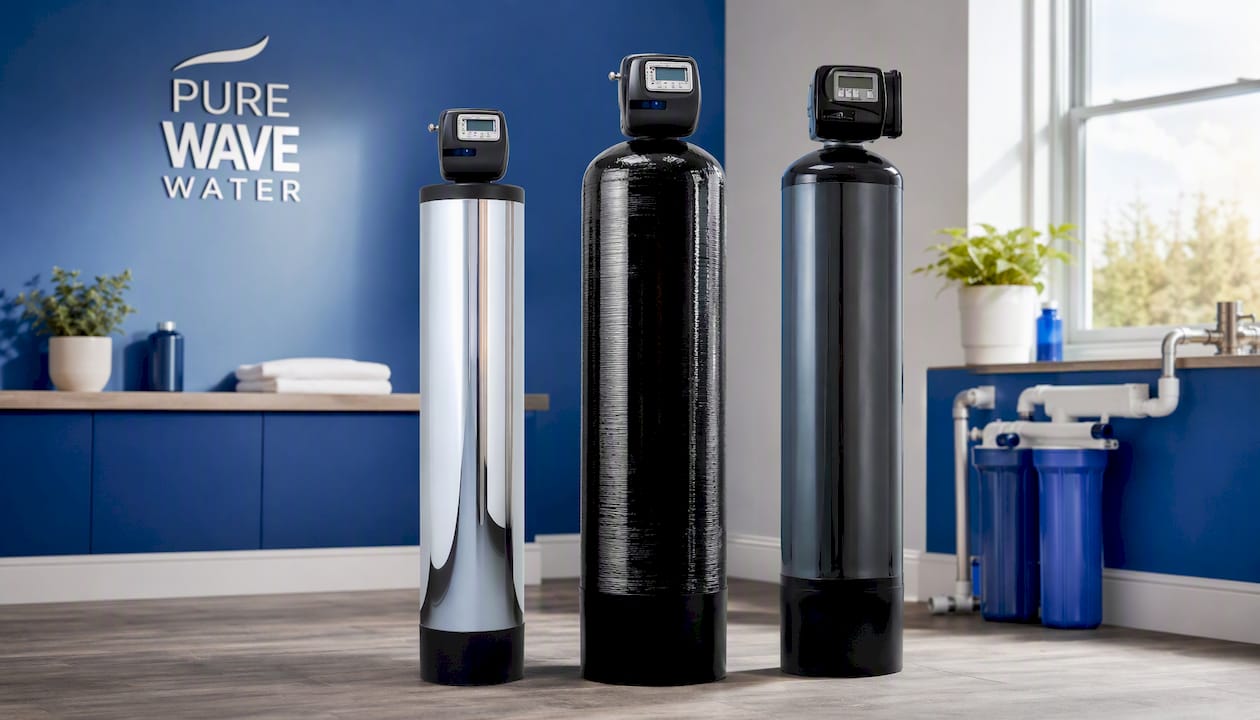
For moderate iron paired with sulphur or manganese, the Zentec Value Hybrid Iron, Sulphur, and Manganese Backwashable Filter is a common recommendation once test results confirm the right range, and the Zentec Premium Air Injection Hybrid Capsulate Iron, Sulphur, and Maganese Filter covers households wanting AIO performance in a lower-maintenance format. After booking, the process runs simply: test, then sample or certified lab analysis if needed, then a written recommendation, then a quote and installation from Pure Wave Water’s own technicians. Browse the full water treatment shop or book a water test to get started, or check the installation and service page if you already know which system you need.
Sources
The thresholds, treatment mechanisms, and testing guidance in this article draw on the following public-health and technical resources:
- Guidelines for Canadian Drinking Water Quality: Guideline Technical Document – Iron
- Iron in Well Water | Minnesota Dept. of Health
- What you need to know about iron in drinking water | Vermont Department of Health
Readers wanting deeper technical background on air injection oxidation and catalytic media performance can also review explanatory material from Capital Flow, which covers the mechanics of these systems in more depth.
This article is general information, not a substitute for advice from a qualified doctor. Consult a qualified healthcare professional about your own circumstances before acting on anything here.
FAQ
Is it safe to drink water with iron in it?
Yes, in most cases. Health Canada treats iron primarily as an aesthetic concern rather than a health risk, with the aesthetic objective set at ≤ 0.1 mg/L based on taste and staining rather than toxicity.
What are the side effects of iron in water?
Below roughly 2 mg/L, most people notice only taste, colour, and staining issues rather than any physical symptoms. Above that level, some people experience mild digestive upset such as nausea, though this threshold sits well above typical well-water readings.
What happens if you have high iron in your water?
High iron causes rust staining on fixtures and laundry, a metallic taste, and clogging in pipes, water heaters, and appliances over time. It can also fuel iron bacteria growth, which produces a slimy biofilm and can foul filters, well screens, and softener resin if left untreated.
What is the normal level of iron in water?
Untreated groundwater varies widely, but Health Canada’s aesthetic objective for treated drinking water is ≤ 0.1 mg/L, with visible discolouration possible above roughly 0.03 mg/L and taste changes above roughly 0.17 mg/L. A certified lab test, whether ordered independently or through in-store testing at a retailer like Pure Wave Water, is the only reliable way to know your actual level.

Pure Wave Water shares educational content about water treatment, water softeners, reverse osmosis systems, UV purification, and filtration solutions. Our guides help readers understand water quality concerns, explore treatment options, and make informed decisions about their water treatment needs.