

For most homeowners, the safest default is a high-purity evaporated salt: it dissolves cleanly and keeps maintenance low. Solar salt is a solid budget-friendly middle option, while rock salt costs less upfront but demands more cleaning. Potassium chloride suits sodium-restricted households, though it comes with health and programming caveats you need to understand before switching.
TL;DR:
- Higher purity salts like evaporated salt reduce sludge buildup and need fewer cleanings annually compared to solar or rock salt.
- Salt purity directly impacts bridging and sludge formation; less pure salts increase maintenance frequency, sometimes up to six times per year for rock salt.
- Potassium chloride is sodium-free but raises health concerns for kidney health and requires programming adjustments and dry storage.
- For average households, it is safest to start with evaporated salt; opt for solar salt if water hardness is moderate and demand is lower.
- Regular water testing informs optimal salt choice, and using automatic salt level monitors prevents tank runouts and unnecessary maintenance.
Table of Contents
- What are evaporated, solar, rock and potassium chloride salts?
- How purity affects sludge, bridging and cleaning schedules
- Potassium chloride: health and softener programming notes
- How to choose the right salt: a step-by-step checklist
- Pellets vs crystals vs blocks: does salt shape matter?
- Cost and value: when does a pricier salt pay off?
- How Pure Wave Water helps you choose and install the right salt
- Our take: the salt matters less than the testing behind it
- Get your water tested before you buy another bag
- FAQ
- Sources
What are evaporated, solar, rock and potassium chloride salts?
The four salts you’ll find on a store shelf are made in very different ways, and that production method is what determines how clean they leave your brine tank.
Evaporated salt starts as underground brine, which is pumped to the surface and boiled down in a controlled process. That extra refining step removes most impurities, leaving a product that typically runs 99.6 to 99.9% sodium chloride. Solar salt forms when seawater or brine evaporates naturally in open ponds under the sun, producing crystals that are generally above 99% pure but with a bit more sediment carried over from the source water.
Potassium chloride is a different compound entirely, not a form of sodium chloride at all.
Purity matters because whatever isn’t sodium chloride (or potassium chloride) is insoluble material: clay, calcium sulfate and other minerals that don’t dissolve in your brine tank. That leftover material settles as sludge, and over time it can harden into a crust that blocks the resin bed from getting the brine it needs.
- Evaporated salt: highest purity, cleanest dissolve, least residue.
- Solar salt: slightly lower purity, moderate residue, good value.
- Rock salt: lowest purity of the three sodium salts, most residue.
- Potassium chloride: high purity, sodium-free, different handling needs.
When you’re comparing bags at the store, the purity percentage and a “for water softeners” label on the packaging tell you more than any brand name does.
How purity affects sludge, bridging and cleaning schedules
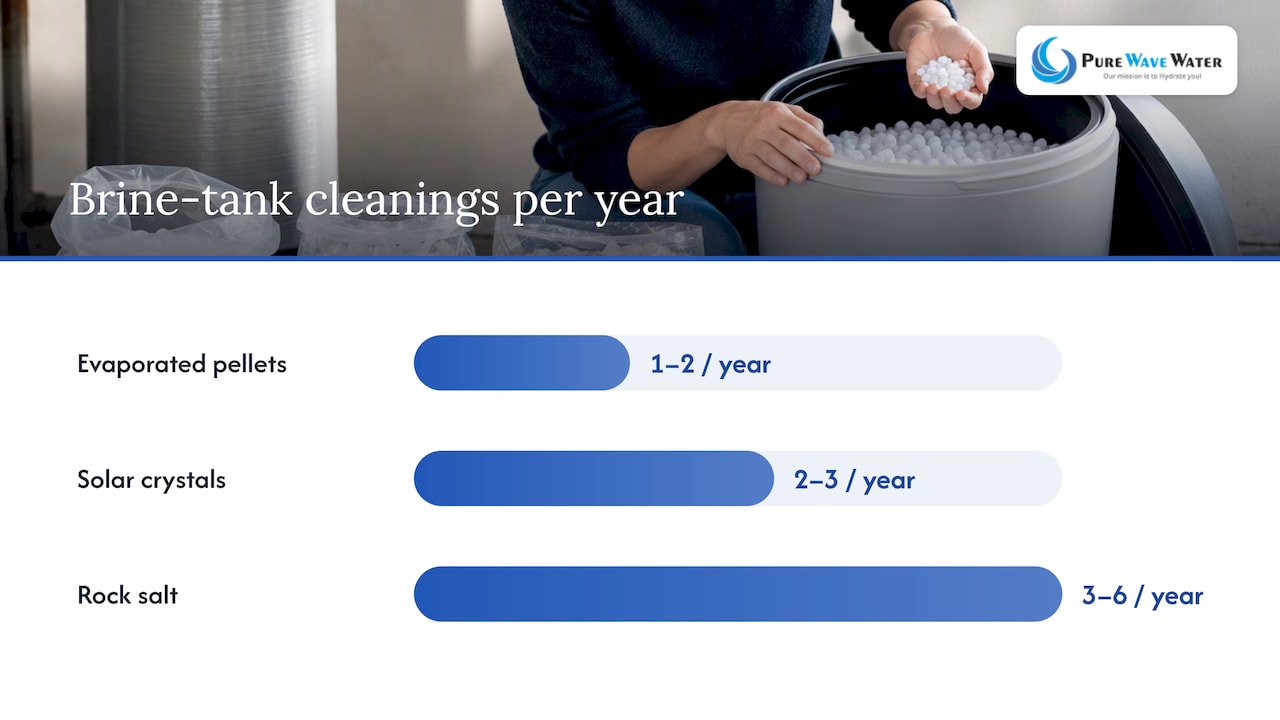
The purity differences above translate directly into how often you’ll be cleaning out your brine tank. Industry guidance suggests evaporated pellets typically need a brine-tank cleaning once or twice a year, solar crystals around two to three times a year, and rock salt anywhere from three to six times a year.
Two problems tend to show up as purity drops: sludge and bridging. Sludge is the loose sediment that collects at the bottom of the tank. Bridging happens when a hard crust forms above the water line, creating an air gap between the salt and the brine below, so the tank looks full but isn’t actually making brine.
A quick three-step check tells you what’s going on:
- Look at the salt level. If it hasn’t dropped despite regular regeneration cycles, suspect a bridge.
- Tap the surface gently. A hollow sound or a crust that doesn’t give usually confirms bridging.
- Check your water for hardness return. Soap not lathering or spots reappearing on dishes often means the brine isn’t reaching the resin.
If you find a bridge, break it up carefully with a broom handle or similar tool, then stir the tank to help any leftover sludge dissolve or settle so it can be scooped out.
Pro Tip: Keep the salt level between a third and two-thirds full rather than topping it right to the brim, since overfilling makes bridging more likely in humid basements.
Potassium chloride: health and softener programming notes
Potassium chloride appeals to sodium-restricted households, but it isn’t a simple swap. Health Canada guidance notes that potassium added during softening can meaningfully raise the potassium level in your drinking water, and that this may pose a risk for people with kidney dysfunction or anyone on medication that affects how their body handles potassium.
Health Canada’s recommended mitigation is straightforward: bypass your drinking water taps so softened, potassium-enriched water isn’t what you’re drinking or cooking with, particularly in a household where someone has kidney concerns.
Beyond the health angle, potassium chloride is also less efficient at softening than sodium chloride. Manufacturer and supplier guidance recommends raising your softener’s hardness setting by about 20 to 25% when you switch to KCl, so it uses enough salt per cycle to match the softening you were getting before.
One more practical wrinkle: potassium chloride can harden or clump in humid basements more readily than sodium salts, so it needs closer monitoring and drier storage.
How to choose the right salt: a step-by-step checklist
Rather than guessing, work through this sequence before you buy your next bag.
- Test your water hardness in grains per gallon or milligrams per litre; this single number drives most of the decision that follows.
- Match moderate hardness to solar salt. If your test comes back in a moderate range and your household demand is average, solar’s lower cost per bag is usually justified.
- Match high hardness or heavy demand to evaporated salt. A larger household, a tankless water heater or very hard incoming water all benefit from evaporated’s cleaner dissolve and lower sludge risk.
- Weigh potassium chloride only if sodium intake is a real concern for someone in the home, and follow the Health Canada bypass advice above, or check with a clinician if kidney health is already a factor.
- Check your owner’s manual before switching to KCl. Confirm the hardness setting adjustment and whether your model’s salt monitor is calibrated for pellets specifically rather than crystals.
- Default to evaporated salt when you’re unsure. It’s the lowest-risk starting point while you observe how your system performs, and you can step down to solar later once you understand your actual maintenance tolerance.
This isn’t a one-time decision. Revisit it if your water source changes, if a new household member has dietary restrictions, or if you notice maintenance creeping up over a season.
Pellets vs crystals vs blocks: does salt shape matter?
Shape affects how your softener dissolves salt and, just as importantly, how accurately any salt-level monitor reads the tank.
- Pellets dissolve predictably and are the shape most salt monitors are calibrated to read, which keeps automated alerts accurate.
- Crystals dissolve well too, but purity still matters more than shape for sludge buildup.
- Blocks are generally discouraged in residential brine tanks because they dissolve unevenly and can contribute to bridging.
- Always check your manual, since some monitoring systems are built around pellet or nugget shapes only and may misread crystal or block salt.
If your softener came with a smart salt sensor, pellets are usually the safer default for keeping those readings trustworthy.
Cost and value: when does a pricier salt pay off?
Rock salt is typically the cheapest per bag, solar sits in the middle, evaporated costs more upfront, and potassium chloride is usually the priciest of the four.
That price order flips in value terms once you factor in labour. If you have very hard incoming water, a large household, or a higher-end softener you’d rather not service every month, evaporated salt’s lower sludge output can save you more cleaning time than the extra bag cost.
- Rock salt: lowest price, most frequent cleaning, best for low-demand systems with high cost sensitivity.
- Solar salt: moderate price and moderate upkeep, a reasonable default for average households.
- Evaporated salt: higher price, lowest upkeep, worth it for heavy demand or hard water.
- Potassium chloride: highest price, chosen for sodium-free softening rather than cost savings.
Buying in bulk from a local supplier often beats retail big-box pricing, though availability can tighten seasonally when demand spikes. Your total annual spend also depends on how much salt each regeneration cycle uses, which is tied to your hardness setting and household water demand rather than the salt type alone.
How Pure Wave Water helps you choose and install the right salt
We often recommend starting with a water test for hardness, iron and other quality concerns, because the right salt choice depends on actual numbers, not a guess. Once we know what you’re working with, we can point you toward a product that fits your system and your maintenance tolerance.
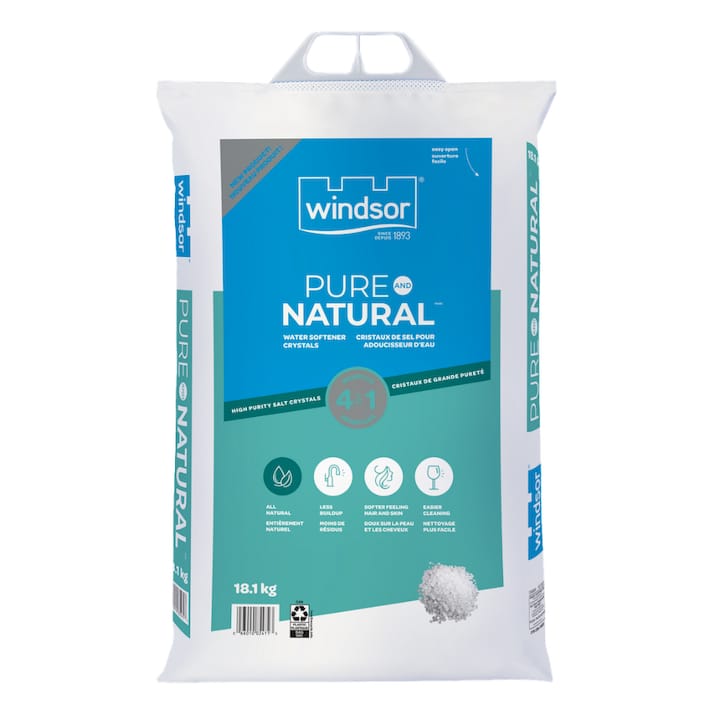
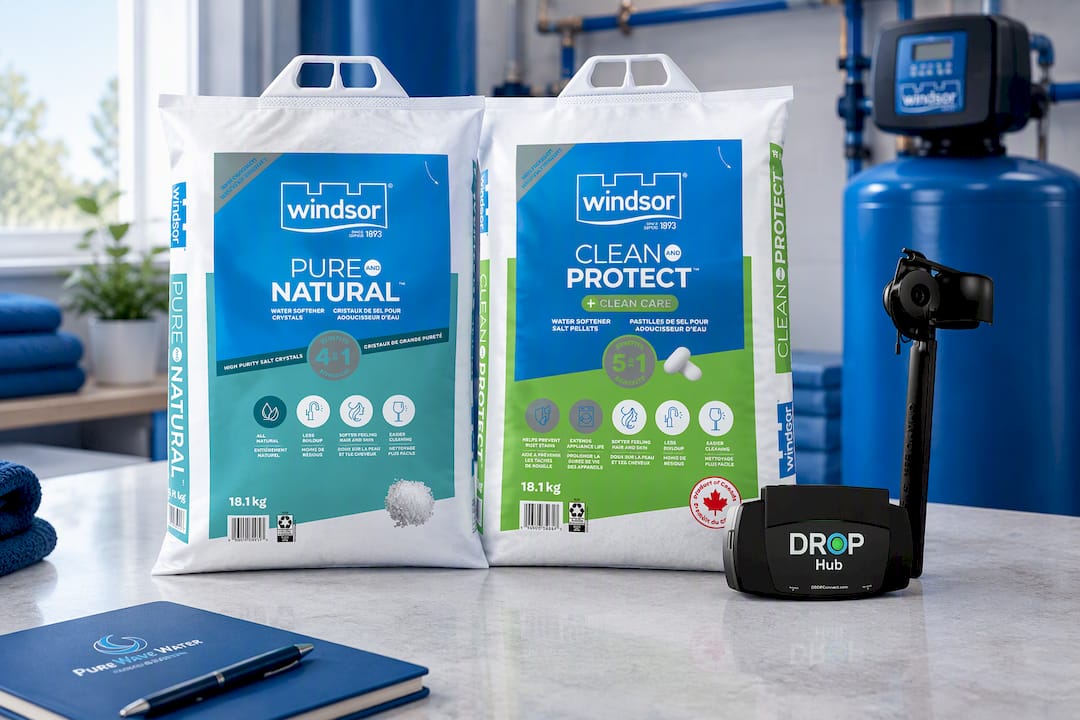
- We carry Windsor Pure Natural Water Softener Salt for households that want a clean, low-residue option.
- We also stock Windsor Clean & Protect Water Softener Salt for homes dealing with iron alongside hardness.
- For ongoing peace of mind, we offer the DROP Salt Sensor System Kit, which tracks salt levels so you’re not guessing when the tank needs a refill.
From there, technicians can supply, install and program systems to match the salt choice.
Our take: the salt matters less than the testing behind it
The honest take is that salt-type debates get more attention than they deserve. Purity differences between a decent evaporated salt and a decent solar salt amount to a few extra cleanings a year, not a fundamentally different softening outcome. What actually moves the needle is whether your hardness setting, resin condition and salt form are matched to your real water, and most households never check that.
Potassium chloride draws outsized interest because it sounds like a health upgrade, but it’s a trade-off, not a free win: less sodium, more potassium, and a programming adjustment most people skip. If sodium is genuinely a concern in your home, that trade is worth making carefully, with the bypass guidance in mind, not casually because a bag says “softer salt” on the label.
Our advice: test first, pick the simplest salt that matches your hardness, and only chase purity or sodium-free formulas once you know they solve a problem you actually have.
— CloudSprout16
Get your water tested before you buy another bag
We make this easier than guessing at a shelf full of bags with different percentages printed on the side. Booking a free in-store water test is recommended to learn exactly what your hardness and iron levels are before choosing a salt.
From there, you can pick up Windsor Pure Natural Water Softener Salt or browse our full shop for softeners, filters and parts. If your system needs a tune-up or a fresh install, our installation and repair team can handle the programming too, so the salt you choose actually performs the way it’s supposed to.
This article is general information, not a substitute for advice from a qualified doctor. Consult a qualified healthcare professional about your own circumstances before acting on anything here.
FAQ
Does it matter which water softener salt I use?
Yes. Purity affects how much sludge and bridging builds up in your brine tank, which changes how often you need to clean it. Higher-purity salts like evaporated salt generally mean less maintenance over a year.
What is the best type of salt to use in a water softener?
Evaporated salt is usually the safest all-around choice because of its high purity and low residue, while solar salt is a reasonable mid-priced option for moderate hardness. Potassium chloride is worth considering only if sodium intake is a specific concern in your household, since it comes with its own handling and health caveats.
What is the best water softener salt to use?
For most homes, a high-purity evaporated salt like Windsor Pure Natural Water Softener Salt offers the cleanest dissolve and lowest maintenance. Households dealing with iron alongside hardness often do better with an iron-fighting formula such as Windsor Clean & Protect Water Softener Salt.
Which salt is best if someone in my home needs a low-sodium diet?
Potassium chloride is the sodium-free alternative, but Health Canada guidance recommends bypassing drinking water taps when using it, since softened water can carry meaningfully more potassium. Anyone with kidney concerns should talk to a clinician before switching.
How often should I add salt to my softener?
This depends on your household’s water demand and hardness setting rather than a fixed schedule, so checking the tank level regularly is more reliable than guessing a timeline. A salt-level monitor, like the DROP Salt Sensor System Kit, can track this automatically so you’re not caught with an empty tank.
Sources

Pure Wave Water shares educational content about water treatment, water softeners, reverse osmosis systems, UV purification, and filtration solutions. Our guides help readers understand water quality concerns, explore treatment options, and make informed decisions about their water treatment needs.