Georgetown’s municipal water has two distinct hardness averages depending on where you live: around 324 mg/L (around 22.7 grains per gallon) for well-based distribution and around 124 mg/L (around 8.7 grains per gallon) for lake-based distribution, according to Halton Region’s analytical averages. Those are distribution-source averages, not a promise about what comes out of your kitchen tap. Before you buy or size any equipment, confirm which supply zone serves your address, then measure your own water.
TL;DR:
- Homeowners should confirm whether their address is connected to well-based or lake-based water supply, as each has significantly different hardness levels.
- Water from well sources averages around 324 mg/L (22.7 gpg), while lake-fed water averages about 124 mg/L (8.7 gpg), affecting treatment needs.
- Regional transfer projects can change household water hardness unexpectedly, so direct testing is essential before selecting treatment equipment.
- Using regional averages to size softeners can lead to oversizing and unnecessary costs; inlet water testing provides accurate data for proper sizing.
- Hardness levels in Georgetown influence appliance efficiency and soap lathering but are not safety concerns; treatment should target actual issues identified through testing.
Table of Contents
- Why does Georgetown have two different water hardness numbers?
- How do I know if my home is well-based or lake-based?
- What do mg/L and grains per gallon actually mean?
- What does this hardness level mean for your home?
- How do I test, decide, and size the right treatment?
- A local perspective on Georgetown’s supply-zone confusion
- Get your water tested before you buy anything
- Sources
- FAQ
Why does Georgetown have two different water hardness numbers?
Georgetown draws water from two very different places, and that’s the whole reason a single “Georgetown hardness number” doesn’t exist. Three municipal well fields pull groundwater from underground aquifers, and that water tends to pick up dissolved calcium and magnesium as it moves through rock and soil. Separately, a portion of the town is fed by treated water piped in from Lake Ontario, which starts out with far less dissolved mineral content.
These two systems don’t casually mix. Halton Region’s own reporting confirms that lake-based and groundwater supply streams do not normally blend in the distribution network, so a home on one side of a pressure zone can have noticeably different water than a home a few streets over.
That divide became more visible during the recent south-Georgetown supply transfer, where a group of addresses previously served by wells was switched onto the lake-based system. A few practical points worth knowing:
- The transfer affected a defined set of south-Georgetown properties, not the whole municipality.
- Local reporting noted that lake water is expected to run noticeably softer than the groundwater those homes used before.
- Some temporary taste or cloudiness during the changeover is normal while the Region finishes testing and commissioning, and it typically resolves as the system settles.
If your street was part of that transfer, your household’s hardness experience may have changed even though your address didn’t move.
How do I know if my home is well-based or lake-based?
You have four practical ways to figure out which supply feeds your address, and it’s worth running through them in order rather than guessing based on a neighbour’s experience.
- Check Halton Region’s transfer project pages and maps, which outline which streets and civic address ranges were moved to lake-based service.
- Look for a mailed notice from Halton Region. Homes affected by the south-Georgetown transfer received direct communication about the change and expected timing.
- Call Halton Region directly with your civic address if the maps aren’t conclusive. Regional staff can confirm your specific service area on the spot.
- Watch for recent service-area update announcements, since transfer projects sometimes proceed in phases rather than all at once.
Keep in mind that a regional distribution average, even a source-specific one, still won’t match your tap reading exactly. Pressure zones, how close your home sits to a well field versus a lake-fed main, and even your own household plumbing can shift the number up or down slightly.
Pro Tip: If your water suddenly tastes or looks different with no obvious cause, check whether your street falls inside an active transfer area before assuming something’s wrong with your plumbing.
What do mg/L and grains per gallon actually mean?
Hardness gets reported two main ways, and mixing them up is the single most common mistake homeowners make when shopping for treatment. Health Canada’s operational guidelines define water hardness as milligrams per litre expressed as calcium carbonate, written as mg/L as CaCO3. Grains per gallon (gpg) is the older, still-common unit for softener sizing.
The conversion is fixed: 1 grain per gallon equals 17.1 mg/L as CaCO3.
Applied to Georgetown’s Halton Region averages:
- Well-based distribution: about 324 mg/L, approximately 22.7 gpg
- Lake-based distribution: about 124 mg/L, approximately 8.7 gpg
That’s a difference of roughly 14 grains per gallon between the two supply zones, which is large enough to change how a softener gets sized. Before you use any hardness number to shop for equipment, confirm whether it’s reported in Canadian imperial gallons or U.S. gallons, since the two systems use different conversion bases and mixing them will throw off sizing calculations.
What does this hardness level mean for your home?
Hardness in the 300+ mg/L range, which describes Georgetown’s well-based distribution average, tends to show up in predictable ways around the house:
- Scale buildup inside water heaters, kettles, and coffee makers, which can reduce efficiency over time.
- Soap and shampoo that lather less easily, often leaving skin and hair feeling filmy.
- Spotting on dishes, glassware, and shower doors from mineral residue.
- Faster wear on fixtures and appliances that rely on consistent water flow.
Lake-based water, at around 124 mg/L, still counts as moderately hard, but most of these effects are milder and less frequent.
It’s worth being clear about what hardness is not: it isn’t a regulatory safety threshold. Halton Region’s monitoring confirms that validated water quality parameters fall within required regulatory ranges, and hardness itself is tracked as an aesthetic and operational measure, not a health limit.
When homeowners decide to act, they’re usually solving one of three separate problems. Ion-exchange softeners target calcium and magnesium hardness specifically. Reverse osmosis systems address broader drinking-water taste and quality goals. Filtration systems handle iron, sediment, or staining, which are unrelated to hardness even though they often show up together in well-fed homes.
Pro Tip: A softener won’t fix chlorine taste, iron staining, or cloudy water on its own. Match the treatment to the actual problem, not just the hardness number.
How do I test, decide, and size the right treatment?
Municipal averages tell you the neighbourhood story. Your own tap tells you the real one. Here’s the sequence that actually works:
- Test at the source. Sample water at your home’s inlet, before it reaches any existing treatment, and separately at the kitchen tap. Ask that hardness be reported in mg/L as CaCO3 so you’re working with a consistent unit.
- Check for related issues. If you’re noticing staining, metallic taste, or odour, request iron and manganese results at the same time. These are separate problems from hardness and need separate solutions.
- Define your goal. Decide whether you’re trying to control scale and extend appliance life, improve drinking water taste, or both. That answer determines whether you need a softener, a reverse osmosis system, or a combination.
- Account for household size. Daily water use and the number of people in the home affect how often a softener needs to regenerate, which matters for both performance and salt use.
- Size from measured hardness, not the town average. Health Canada recommends inlet and outlet sampling to confirm treatment is actually working after installation, not just at the point of sale.
Georgetown homeowners can get a real inlet reading, not a regional estimate, through Pure Wave Water’s free in-store water test. If you already know you’re dealing with hardness in the well-based range, browse the water softeners category to compare capacity options, or read more on how hardness testing works before you book.
A local perspective on Georgetown’s supply-zone confusion
The most common mistake we see homeowners make isn’t ignoring hardness. It’s assuming the town-wide well-based figure of roughly 324 mg/L applies to every Georgetown address, including homes that were quietly moved onto lake-based supply during the recent transfer project. That single assumption leads to oversized softeners, unnecessary salt costs, and confusion when a neighbour’s water behaves nothing like theirs.
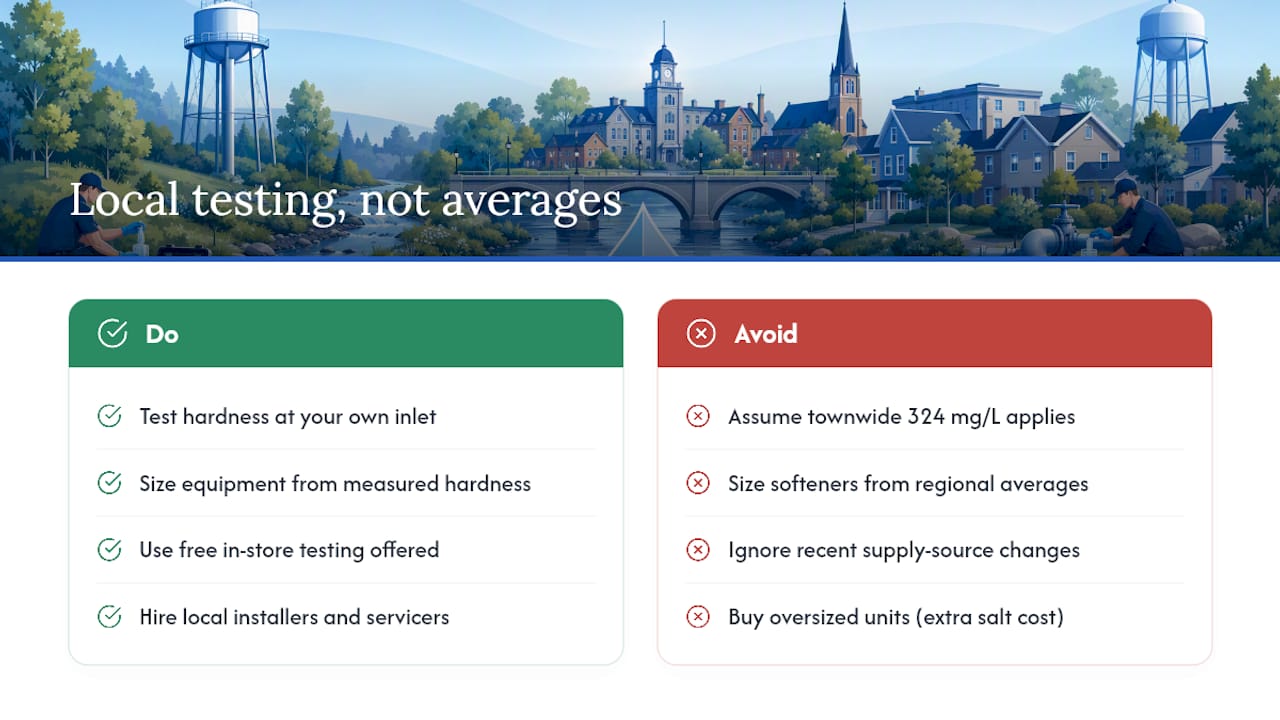
Water testing and treatment in this area has been ongoing for many years, following the consistent pattern that regional averages are useful but sizing equipment needs to be based on measurements at your own inlet. Free in-store testing supports this approach, and local installation and servicing are valuable alongside the equipment itself.
For readers dealing with hardness specifically, common product lines include water softener salt for ongoing maintenance, commercial water softeners designed for larger households or light commercial use, and standard whole-home water softener units. The best fit depends entirely on measured hardness and daily water use, not on regional averages.
— CloudSprout16
Get your water tested before you buy anything
Guessing at your hardness level from a regional average is how homeowners end up with the wrong-sized softener sitting in their basement. Free in-store water testing is available for hardness, iron, and related concerns common in Georgetown homes, whether supplied by well-based or lake-based sources. Recommendations following testing are based on actual inlet readings and focus on providing appropriate equipment.
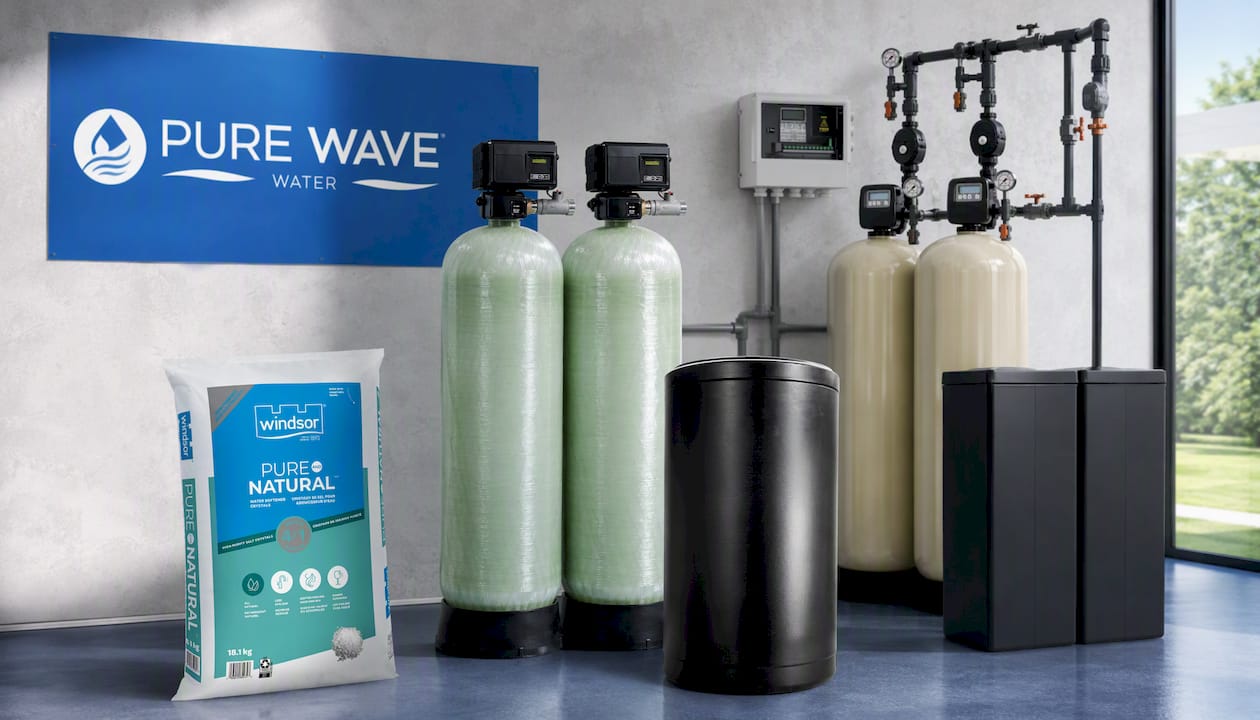
If your test points to hardness treatment, you can compare options in the water softeners lineup, including the 75K Progressive Duplex Water Softener for typical whole-home use or the Excalibur Duplex 300K Commercial system for larger households. Already own a softener and just need consumables? Windsor Pure Natural Water Softener Salt and other supplies are available through the online shop, and installation or repair support is available through Pure Wave Water’s service team. Book your free water test to find out exactly what your home is working with.
Sources
- Analytical averages of distribution system water – 2025
- Guidelines for Canadian Drinking Water Quality: Operational parameters
- Here’s when 15,000 Georgetown residents will begin receiving water from Lake Ontario
FAQ
How do I find the water hardness in my area?
Check Halton Region’s published distribution averages for your specific supply zone, since well-based and lake-based areas differ significantly. For an exact reading at your own address, request a free in-store water test through Pure Wave Water rather than relying on a town-wide average.
Where in Ontario has the hardest water?
Hardness varies widely by municipality and by whether the source is groundwater or a lake system, with groundwater generally running harder. In Georgetown specifically, well-based distribution averages around 324 mg/L, noticeably higher than the lake-based average of about 124 mg/L in the same town.
Where does Georgetown, Ontario get its water from?
Georgetown’s municipal water comes from two sources: three groundwater well fields and a lake-based supply piped from Lake Ontario. A regional transfer project has moved some south-Georgetown addresses from groundwater onto the lake-based system in recent years.
Is tap water safe in Georgetown?
Halton Region’s monitoring confirms that validated water quality parameters fall within required regulatory ranges across the distribution system. Hardness itself is an aesthetic and operational factor, not a safety concern, though homeowners often choose treatment to manage scale and appliance wear.
Does Pure Wave Water test hardness for free?
Yes, Pure Wave Water offers a free in-store water test that measures hardness along with iron and other common concerns. Pricing for any recommended treatment or installation is provided after your results come in, based on what your water actually needs.

Pure Wave Water shares educational content about water treatment, water softeners, reverse osmosis systems, UV purification, and filtration solutions. Our guides help readers understand water quality concerns, explore treatment options, and make informed decisions about their water treatment needs.