Georgetown’s municipal water has two distinct hardness averages depending on where you live: around 324 mg/L (about 18.9 grains per gallon) for well-based distribution and around 124 mg/L (about 7.3 grains per gallon) for lake-based distribution, according to Halton Region’s analytical averages. Those are distribution-source averages, not a promise about what comes out of your kitchen tap. Before you buy or size any equipment, confirm which supply zone serves your address and test your own water.
TL;DR:
- Georgetown homeowners should confirm whether their address is connected to well-based or lake-based water supply because hardness can differ significantly between the two.
- Well-based water averages around 324 mg/L, or about 18.9 gpg using the 17.1 mg/L-per-gpg conversion used by Pure Wave Water, while lake-based water averages around 124 mg/L, or about 7.3 gpg.
- Changes in local water supply can affect the hardness a household experiences, so testing your own water is more useful than relying only on a regional average.
- Water softener sizing should be based on measured hardness and household needs rather than a town-wide estimate.
- Hard water can contribute to scale, spotting and reduced soap lather, but treatment should be matched to the actual water conditions found through testing.
Table of Contents
- Why does Georgetown have two different water hardness numbers?
- How do I know if my home is well-based or lake-based?
- What do mg/L and grains per gallon actually mean?
- What does this hardness level mean for your home?
- How do I test, decide, and size the right treatment?
- A local perspective on Georgetown’s supply-zone confusion
- Get your water tested before you buy anything
- Sources
- FAQ
Why does Georgetown have two different water hardness numbers?
Georgetown draws water from different sources, which is why one hardness number does not necessarily describe every home in the community. Groundwater generally contains more dissolved calcium and magnesium after moving through rock and soil, while lake-based water can have a different mineral profile.
Halton Region publishes analytical averages for its distribution systems, giving Georgetown and Halton Hills homeowners a useful regional reference. However, a distribution average should still be treated as a starting point rather than an exact reading for an individual home.
The difference became more relevant during the south-Georgetown water supply transfer, where some properties previously supplied by groundwater were moved to lake-based water. A few practical points are worth knowing:
- The transfer applied to specific properties rather than every Georgetown address.
- Local reporting noted that households receiving Lake Ontario water could experience noticeably softer water than they had with the previous groundwater supply.
- If your home’s water supply has changed, an older hardness reading may no longer represent what is currently entering the home.
If your street was part of a supply change, testing a fresh sample is the simplest way to understand your current hardness level.
How do I know if my home is well-based or lake-based?
If you are unsure which municipal supply serves your Georgetown address, start with information from Halton Region rather than assuming your water is the same as a neighbour’s.
- Check current Halton Region information about Georgetown’s municipal water system and any applicable water supply transfer projects.
- Review notices you may have received regarding changes to municipal water service at your address.
- Contact Halton Region if you need confirmation of the municipal supply serving a specific property.
- Test a current water sample before sizing treatment equipment, particularly if your water supply has changed.
Regional averages are useful for understanding local water conditions, but a test from your own home provides a more relevant number when you are deciding whether treatment is needed.
Pro Tip: If your water has changed noticeably, check whether there have been changes to your local water supply and test a fresh sample before adjusting or replacing treatment equipment.
What do mg/L and grains per gallon actually mean?
Water hardness is commonly expressed in milligrams per litre as calcium carbonate, written as mg/L as CaCO3, or in grains per gallon (gpg).
Pure Wave Water’s current hardness guide uses the standard water-treatment conversion of 1 gpg = 17.1 mg/L. Keeping the same conversion throughout the article and during softener sizing avoids mixing U.S. and Imperial gallon-based figures.
Using that conversion for the Georgetown figures discussed in this article:
- Well-based distribution: about 324 mg/L ÷ 17.1 = approximately 18.9 gpg
- Lake-based distribution: about 124 mg/L ÷ 17.1 = approximately 7.3 gpg
That is a difference of about 11.6 gpg between the two figures.
If a municipal report gives hardness in mg/L but your water softener information uses grains per gallon, divide the mg/L value by 17.1 so the numbers are being compared on the same basis.
For more detail, see Pure Wave Water’s guide on testing water hardness in Canada.
What does this hardness level mean for your home?
Hardness above 300 mg/L falls well into the very hard range used in Pure Wave Water’s hardness guide. In a Georgetown home, higher hardness can show up in familiar ways:
- Scale buildup inside kettles, water heaters and other equipment that regularly heats water.
- Mineral deposits around faucets and plumbing fixtures.
- Spotting on dishes, glassware and shower doors.
- Soap and shampoo that do not lather as easily.
At around 124 mg/L, the lake-based figure falls into the hard range in the classification used by Pure Wave Water. It is considerably lower than the 324 mg/L well-based figure, but it can still produce noticeable hardness-related effects in a home.
Hardness is different from contaminants such as iron or chlorine. Pure Wave Water’s current in-store testing page treats hardness, iron, TDS, pH and chlorine as separate water characteristics because each can point toward a different treatment need.
Water softeners are intended to address hardness. Other water quality concerns may require different treatment, which is why testing before choosing equipment matters.
Pro Tip: Do not choose a water treatment system based only on visible symptoms. Test the water first so you know whether you are dealing with hardness, iron, chlorine or another issue.
How do I test, decide, and size the right treatment?
Municipal hardness averages provide useful local context, but treatment decisions should be based on the water you are actually using.
- Test your water. Pure Wave Water’s Georgetown store offers a free basic in-store water test. Bring a clean 500 ml water sample in a clean bottle.
- Look beyond hardness. The current basic in-store test checks hardness, iron, total dissolved solids (TDS), pH and chlorine, with manganese tested where applicable.
- Identify the actual problem. Hardness, iron, chlorine taste and other water concerns are different issues and should not automatically be treated with the same equipment.
- Consider household size. Pure Wave Water uses household size along with water conditions when helping determine an appropriate system size.
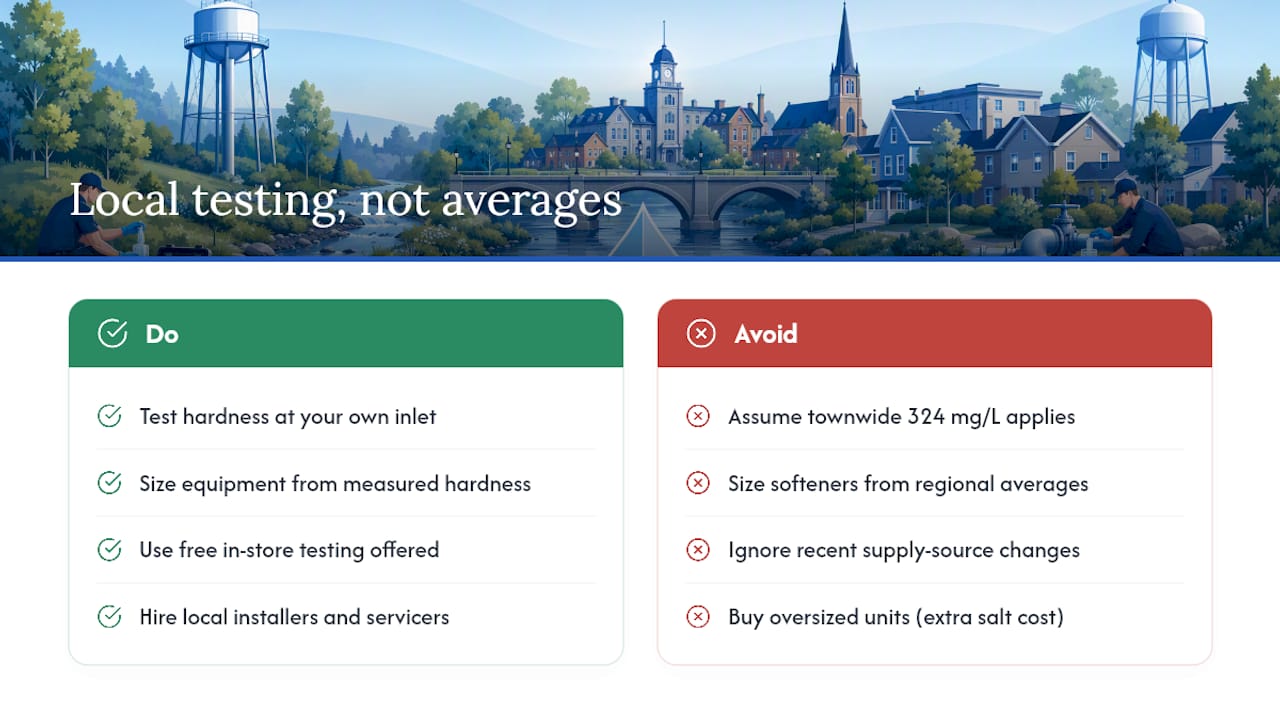
- Use the measured hardness number. Do not size a water softener solely from a Georgetown-wide or regional average when you can test the water from your own home.
Georgetown homeowners can bring a sample to Pure Wave Water’s Georgetown store for a free basic in-store water test. The current test covers hardness, iron, TDS, pH and chlorine, with manganese checked where applicable.
If testing confirms that hardness is the issue you want to address, you can review Pure Wave Water’s current water softener selection or read the water hardness testing guide before choosing equipment.
A local perspective on Georgetown’s supply-zone confusion
One of the easiest ways to get water softener sizing wrong is to assume that one Georgetown hardness figure applies to every address.
A home receiving harder groundwater and a home receiving lake-based water can have very different hardness readings. Using a regional average without testing your own water can therefore lead to a system being sized around a number that does not accurately represent your home.
Pure Wave Water has been testing and treating local water in Georgetown for more than three decades. Its current approach is to test first, explain the results and recommend treatment based on the water conditions and household needs.
For homeowners dealing specifically with hard water, Pure Wave Water’s current website lists residential water softeners, water softener salt, replacement parts and commercial water treatment equipment. The appropriate option depends on the water being treated rather than a single town-wide hardness estimate.
Get your water tested before you buy anything
If you live in Georgetown or the surrounding Halton Hills area, testing your own water is more useful than guessing from a regional hardness average.
Pure Wave Water currently offers a free basic in-store water test at its Georgetown location. The basic test checks:
- Hardness
- Iron
- Total dissolved solids (TDS)
- pH
- Chlorine
- Manganese, where applicable
This gives homeowners a clearer picture of the water they are actually using before choosing treatment equipment.
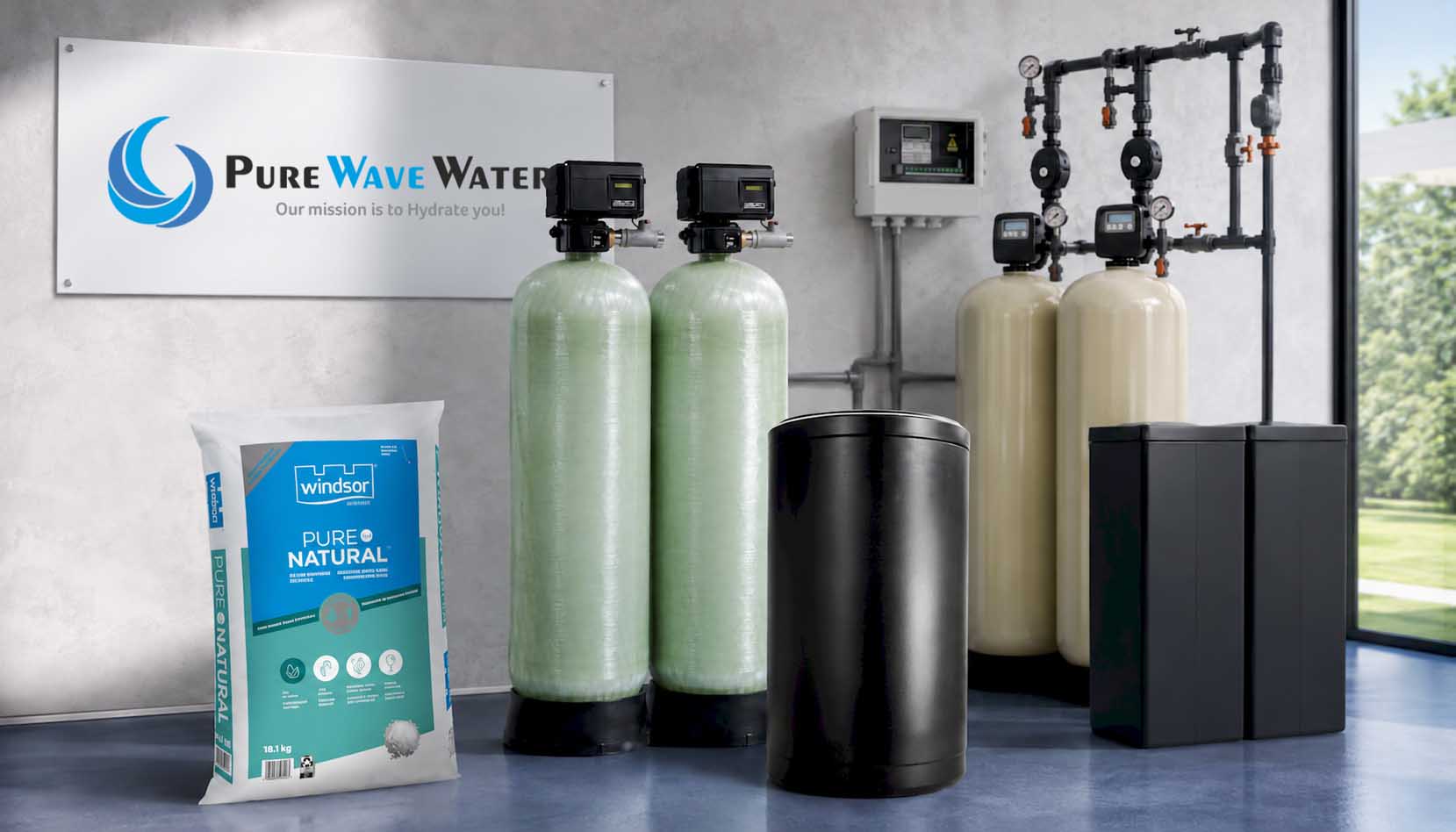
If testing confirms a hardness problem, you can compare the current water softener lineup. If you already own a softener, Pure Wave Water also lists water softener salt, parts and other maintenance supplies in its online shop.
Pure Wave Water’s current service information also lists installation, repair and maintenance for water treatment systems in Georgetown, Halton Hills and surrounding communities. Visit the service page or book a free water test before deciding what your home needs.
Sources
- Halton Region — Analytical Averages of Distribution System Water
- Health Canada — Guidelines for Canadian Drinking Water Quality: Operational Parameters
- HaltonHillsToday — Georgetown Lake Ontario Water Supply Transfer
- Pure Wave Water — Test Water Hardness in Canada
- Pure Wave Water — Free Water Test
FAQ
How do I find the water hardness in my area?
Halton Region’s published distribution information can give Georgetown homeowners a regional reference. For a reading that reflects the water you are actually using, bring a current sample to Pure Wave Water’s Georgetown store for its free basic in-store water test.
Where in Ontario has the hardest water?
Water hardness varies across Ontario and can also vary within the same municipality depending on the water source. In Georgetown, the figures discussed in this article show a substantial difference between well-based and lake-based water, which is why a local water test is more useful than assuming one number applies everywhere.
Where does Georgetown, Ontario get its water from?
Georgetown has received municipal water from groundwater sources as well as lake-based supply. Some south-Georgetown properties have also been transferred from groundwater to Lake Ontario water, so the source serving a particular address can matter when comparing hardness figures.
Is hard water in Georgetown a health concern?
Hardness is primarily associated with operational and household effects such as scale, spotting and soap performance. The main reason Georgetown homeowners consider hardness treatment is typically to reduce these effects and protect plumbing fixtures and water-using equipment.
Does Pure Wave Water test hardness for free?
Yes. Pure Wave Water’s current website states that its basic in-store test is free and includes hardness, iron, TDS, pH and chlorine, with manganese tested where applicable. Homeowners can bring a clean 500 ml sample to the Georgetown store during opening hours.

Pure Wave Water shares educational content about water treatment, water softeners, reverse osmosis systems, UV purification, and filtration solutions. Our guides help readers understand water quality concerns, explore treatment options, and make informed decisions about their water treatment needs.