
Most black specks in tap water come from degrading rubber parts, a failing water heater, or mineral particles like manganese, not from the municipal supply. A quick smear test and a hot versus cold check will usually tell you which. If the specks smear between your fingers or show up only from hot taps, start by replacing supply hoses or checking your water heater. If they feel gritty and appear at every tap, collect a sample and get it tested.
TL;DR:
- Most black specks originate from deteriorating rubber parts, such as washers, O-rings, or faucet cartridges, shedding microscopic fragments into your water.
- Hot water specks usually indicate a failing water heater or internal plastic components breaking down, while gritty particles suggest mineral deposits like manganese or iron.
- Performing a smear test and comparing hot and cold water helps identify whether rubber debris or mineral particles are causing the discoloration.
- Replacing aging hoses, flushing your water heater, and inspecting faucet components are quick fixes that often resolve the issue without professional intervention.
- Persistent or whole-house black specks may require lab testing, oxidation treatment, or filtration systems like reverse osmosis to remove mineral particles effectively.
Table of Contents
- Common causes of black specks in tap water
- How to identify where the black specks are coming from
- Health risk, testing and manganese guidance
- Practical fixes: immediate steps and longer-term treatments
- When a professional visit makes sense
- A homeowner’s take on chasing down black specks
- Where to go for guidance and testing
- Sources
- FAQ
Common causes of black specks in tap water
Black specks almost always trace back to something inside your home, not a citywide problem with your drinking water. The most frequent culprit is rubber: washers, O-rings, and faucet cartridges break down over years of use and shed small black fragments into the water stream. Flexible braided supply hoses under sinks and behind appliances often have a black rubber liner that degrades with age or from exposure to chlorine and chloramines, and those fragments travel straight to your tap.
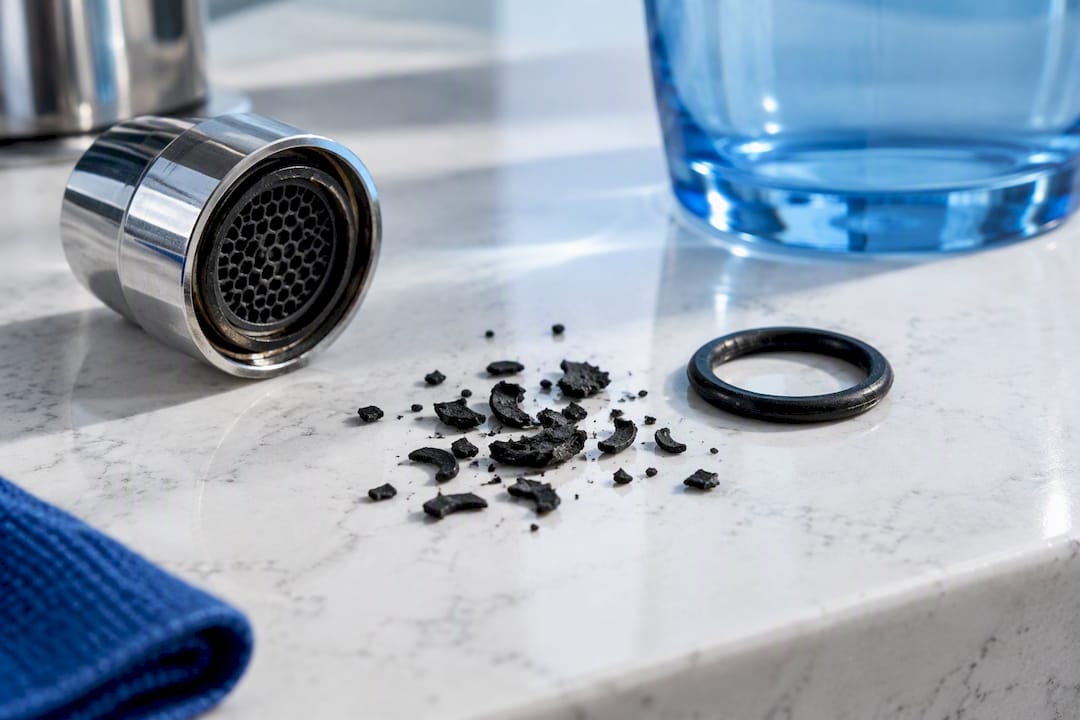
Water heaters are another common source. As the internal dip tube or other plastic components break down, they release flakes that show up almost exclusively in hot water. If you’ve only noticed specks from your hot tap, this is worth checking first.
Mineral particles are the other main category. Manganese and iron can appear as fine black or dark brown grit rather than a soft smear, and this distinction matters for diagnosis:
- Rubber and plastic debris smears when rubbed between your fingers and often comes from hoses, washers, or heater parts.
- Manganese or iron particulates feel gritty and don’t smear, and tend to appear at multiple taps rather than just one.
- Corroding pipe scale can flake off older galvanized or steel pipes, especially after pressure changes or nearby plumbing work.
- Filter media attrition happens when carbon or sediment filters break down internally and release fine black particles downstream.
Knowing which category you’re dealing with narrows your next steps considerably.
How to identify where the black specks are coming from
Before buying parts or booking a technician, a few simple checks at home can tell you a lot.
- Run the smear test. Catch some specks on a white paper towel or coffee filter and rub them between your fingers. A smear points to rubber or plastic debris, while gritty, non-smearing particles suggest manganese or iron.
- Compare hot and cold water from the same tap. If specks only appear in hot water, the water heater or hot-side plumbing is the likely source.
- Test one tap, then the whole house. Run water from a single faucet first. If only one tap is affected, the problem is local to that fixture’s hose or cartridge; if every tap shows specks, look further upstream at the heater, main line, or a whole-house filter.
- Note the timing. Specks that appeared right after a vacation, after plumbing repairs, or after installing a new filter often point directly to that recent change.
- Keep a labelled sample. If the source isn’t obvious, collect water in a clean jar, photograph the particles, and set the sample aside in case a lab test is needed.
Pro Tip: Run the hot tap for a full minute before testing. Sediment that has settled overnight can give a false read on a quick first-draw sample.
Health risk, testing and manganese guidance
Most plumbing debris, like rubber fragments or pipe scale, isn’t a health concern on its own, but it does signal a component that needs repair before it fails or damages an appliance. Mineral particles are a slightly different story, and manganese is worth understanding specifically because it can be visible well before it reaches concentrations of health concern.
Manganese has both an aesthetic and a health-based guideline in Canada, and the two numbers are ten times apart. According to Health Canada’s guideline technical document on manganese, the aesthetic objective sits at about 0.02 mg/L to limit visible discolouration, while the maximum acceptable concentration for health considerations is 0.12 mg/L. Particulate manganese oxides can be visually detectable at concentrations well below either threshold, which is why you might see black flecks in your water long before manganese becomes a measurable health issue.
A draft assessment of manganese and its compounds explains why: manganese exists in both a soluble form and a particulate oxide form, and it’s the particulate form that shows up as visible dark specks.
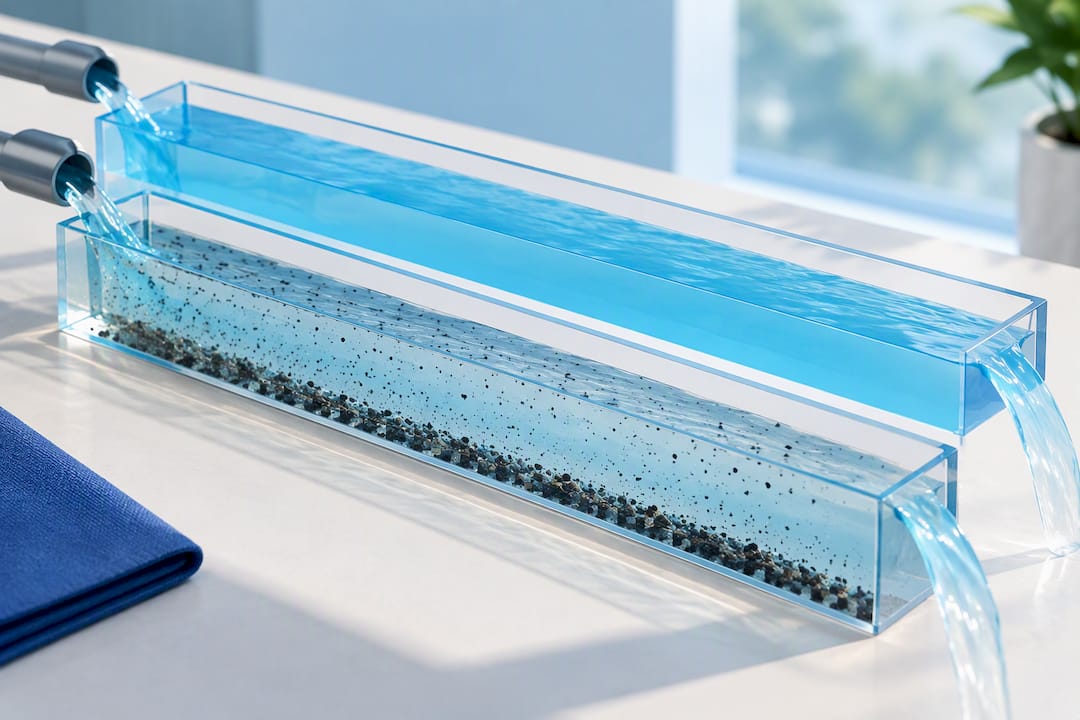
Testing makes sense if you’re on a private well, if the problem affects your whole house rather than one tap, if you’re seeing ongoing staining or discolouration, or if taste or odour has changed alongside the specks. Well owners should arrange testing through an accredited lab; if you’re on municipal water, your supplier can advise, though a recurring or whole-house issue usually still calls for its own sample.
Practical fixes: immediate steps and longer-term treatments
Start with the cheapest, fastest checks before assuming you need a new system.
Right now:
- Flush your lines by running cold water at your main tap for a few minutes.
- Remove and clean aerators and showerhead screens, where debris tends to collect.
- Inspect faucet cartridges for cracking or crumbling rubber and replace flexible supply hoses that show wear.
At the water heater: flush the tank to clear sediment, and inspect the dip tube for cracking or disintegration. If interior components are crumbling rather than just aging, that’s a job for a technician rather than a DIY fix.
At your filters: check pre-filters and cartridges for saturation or physical breakdown. Media that has reached the end of its service life can shed particles rather than trap them, so replace it rather than pushing it further.
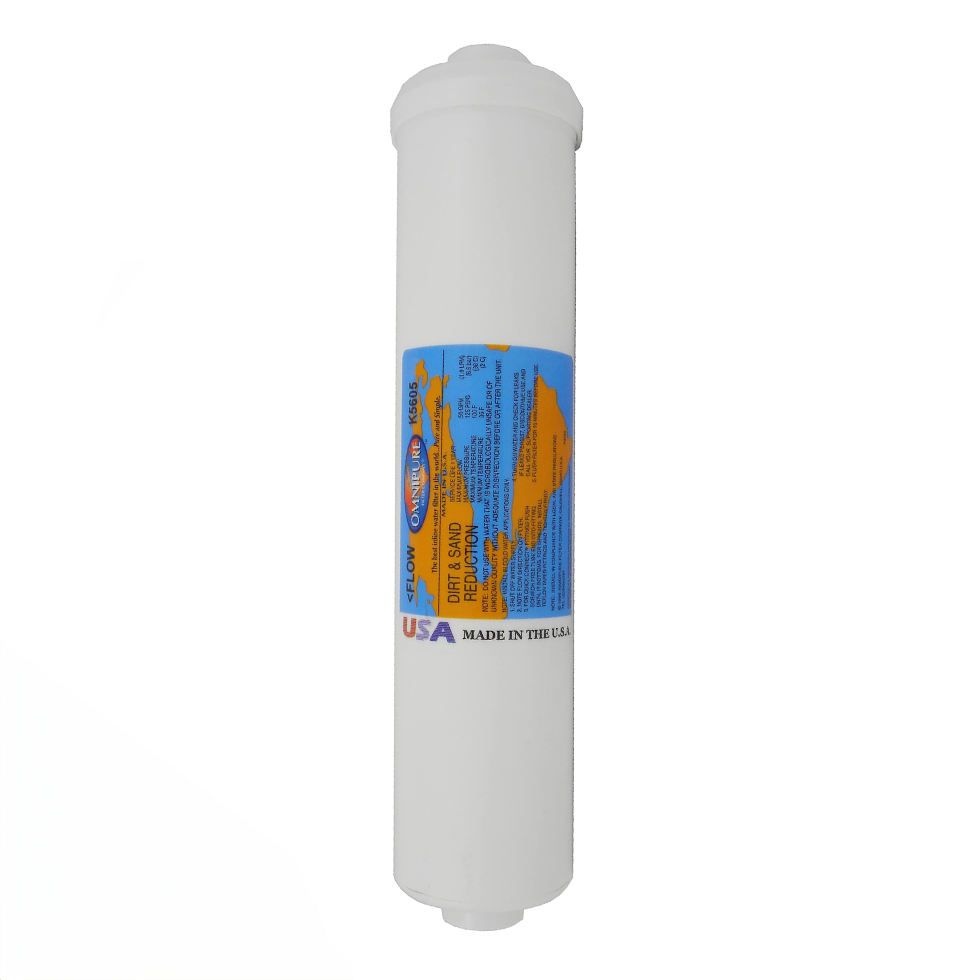
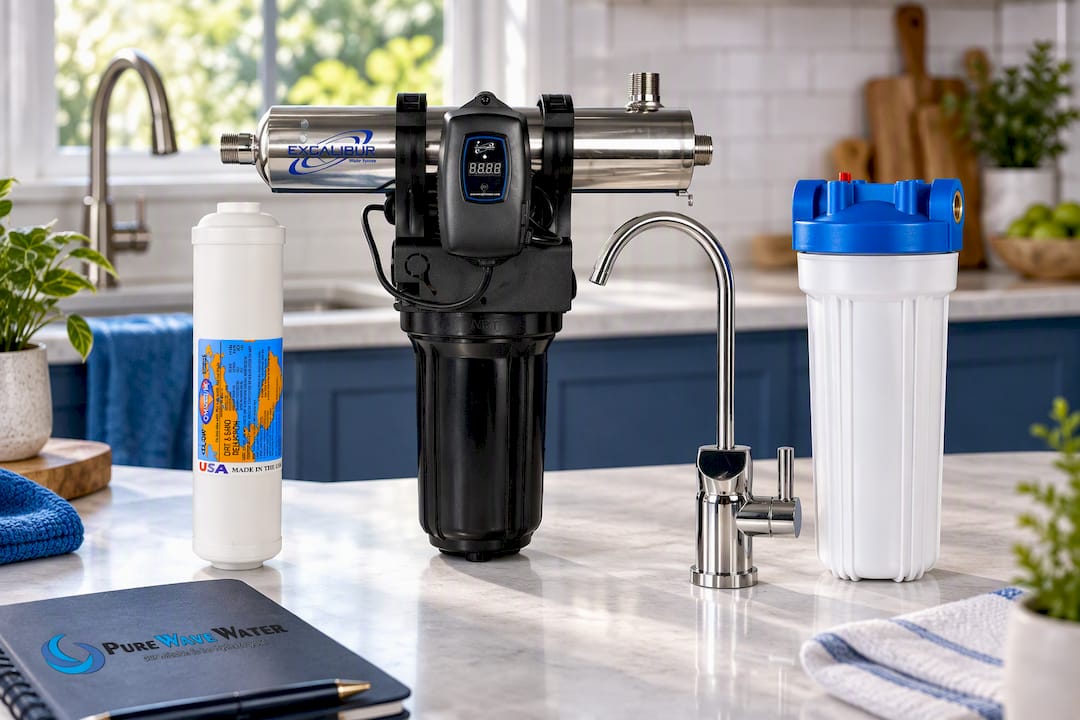
For recurring mineral sediment, a dedicated sediment pre-filter like the Omnipure K5605-JJ Sediment Filter or a Pre 10" Sediment Filter catches particulate matter before it reaches your fixtures. Where manganese is confirmed, oxidation paired with filtration is the standard approach, and point-of-use reverse osmosis, such as the Smart Purifier™ Plus RO Faucet, Chrome, removes both dissolved and particulate forms at the tap. If biological concerns come up alongside sediment issues, a UV system such as the Excalibur Signature Series Premium Ultraviolet System, 8GPM, Pre 10" Sediment Filter adds disinfection to the mix.
Pro Tip: Replace braided supply hoses every 5 to 7 years even if they look fine. The rubber liner degrades from the inside out, long before it’s visible from outside the braid.
When a professional visit makes sense
If your smear test, hot/cold check, and tap isolation still leave you guessing, or the specks keep coming back after a DIY fix, it’s time for a proper diagnosis. A typical visit starts with a water sample, either brought into a Pure Wave Water location for free in-store testing or collected by a technician on-site, followed by a visual inspection of your fixtures, hoses, and water heater.
From there, a technician can tell you whether you’re dealing with a worn part, a mineral issue, or both, and provide a written quote before any work begins.
- Free in-store testing covers hardness, iron, and other common water-quality concerns.
- Local technicians handle installation and repair of sediment filters, RO systems, and UV units.
- Routine fixes, like hose or cartridge replacement, are usually quick, while treatment installations involve a scheduled visit after your test results come back.
Pure Wave Water’s technicians service both the systems they sell and most major brands already in your home, so a fix doesn’t necessarily mean replacing everything.
A homeowner’s take on chasing down black specks
Most people assume black specks mean something is wrong with the water supply itself, but in years of fielding these calls, the pattern points almost every time to something inside the house: a hose, a cartridge, a heater part. That’s actually good news, because it means the fix is usually contained and affordable rather than a citywide problem you can’t control.
The mistake worth avoiding is skipping the smear test and jumping straight to buying a filter. A $20 hose replacement solves more of these cases than any filtration upgrade does, and testing first saves you from buying the wrong solution.
— CloudSprout16
Where to go for guidance and testing
Health Canada’s guideline technical document on manganese sets out the aesthetic and health-based thresholds referenced above, while the draft assessment on manganese and its compounds covers the underlying chemistry in more detail. If you’d rather skip the guesswork, Pure Wave Water offers free in-store testing and can point you toward the right next step.
This article is general information, not a substitute for advice from a qualified doctor. Consult a qualified healthcare professional about your own circumstances before acting on anything here.
FAQ
Are black specks in water harmful?
Most black specks come from degrading rubber parts or plastic components and aren’t considered a health hazard, though they signal a part that needs replacing. Particulate manganese is generally treated as an aesthetic issue at the concentrations that make it visible, though persistent whole-house particles are worth testing to rule out other concerns.
How do I get rid of black specks in water that smear?
Specks that smear point to rubber or plastic debris, usually from a supply hose, faucet cartridge, or washer. Replace the affected hose or cartridge, flush the line, and clean your aerator; if the problem is limited to hot water, check your water heater’s dip tube next.
What are the black flecks in my filtered water?
Black flecks after a filter often mean the filter media has broken down and started releasing particles instead of trapping them. Check whether the cartridge is past its rated life and replace it, since exhausted media can shed rather than filter.
What causes black stuff in water from a faucet?
The most common causes are a degrading rubber washer or cartridge inside the faucet, a failing supply hose, or sediment loosened by recent plumbing work. Run the cold tap alone first to see if the specks are limited to that one fixture before assuming a whole-house cause.

Pure Wave Water shares educational content about water treatment, water softeners, reverse osmosis systems, UV purification, and filtration solutions. Our guides help readers understand water quality concerns, explore treatment options, and make informed decisions about their water treatment needs.