
Test first. Once you know whether you’re dealing with dissolved (ferrous) iron, rusty (ferric) iron, or iron bacteria, and at what concentration, you can match it to the right fix: sediment filtration for visible iron, oxidation plus filtration for dissolved iron, or chlorination for bacterial iron. The good news? Iron in drinking water is generally considered an aesthetic nuisance rather than a health hazard, and it’s genuinely fixable once you know what you’re up against.
TL;DR:
- Proper lab testing is essential to identify the specific form and concentration of iron, manganese, and bacteria before choosing treatment equipment.
- Iron can appear as ferrous (dissolved, invisible until oxidized), ferric (immediately visible as rust-colored water), or bacterial (causing slimy deposits and odors).
- Treatment options depend on iron type and levels, ranging from sediment filters for ferric iron to chemical oxidation or air-injection systems for ferrous iron.
- Regular maintenance, including backwashing, media replacement, and shock chlorination, is necessary to keep systems functioning and prevent bacterial regrowth.
- Accurate diagnosis and matching treatment systems to water test results prevent costly mistakes versus generic or inappropriate solutions.
Table of Contents
- How to recognise iron in your water and its three common forms
- What to test for and how to get accurate lab results
- Treatment methods: how each option works and when it actually helps
- How to choose the right iron removal system for your home
- Maintenance, troubleshooting, and when systems fail
- Purewavewater’s approach to diagnosing and treating iron problems
- Why homeowners overthink iron removal, and where they actually go wrong
- How Purewavewater can help you fix it, not just filter it
- Sources
How to recognise iron in your water and its three common forms
Iron shows up in three distinct disguises, and each one gives itself away differently.
Ferrous iron is the sneaky one. It’s fully dissolved and invisible coming out of the tap, but leave a glass sitting for 15 to 30 minutes and it turns cloudy, then rusty, as it hits air and oxidizes. That colour change after the fact is your biggest clue.
Ferric iron is already oxidized before it reaches your faucet. You’ll see it immediately: reddish brown water, orange or rust coloured staining on sinks, toilets, and tubs, and laundry that comes out of the wash looking worse than it went in.

Colloidal or organic iron, and iron bacteria, are the trickiest. Bacteria don’t just tint your water. They leave slimy, rust coloured or brown gelatinous buildup in toilet tanks and well components, sometimes paired with a musty or “swampy” odour and a metallic aftertaste that lingers even in cold water.
A few quick home checks help you narrow it down before you call a lab:
- Fill a clear glass and watch for colour development over 30 minutes (points to ferrous iron).
- Check toilet tank walls and shower heads for slimy, stringy deposits (points to bacteria).
- Look for reddish brown staining that appears instantly at the tap (points to ferric iron).
- Smell the water straight from the tap for a musty or rotten odour (another bacteria signal).
These checks are a starting point, not a diagnosis. Only accredited lab testing tells you the actual concentration and confirms which form you’re dealing with, which matters because guessing wrong here is exactly how homeowners end up buying the wrong equipment twice.
What to test for and how to get accurate lab results
A proper water panel for iron problems should include:
- Total iron — the overall concentration, reported in mg/L.
- Dissolved iron (Fe2+) — tells you how much is ferrous versus already oxidized.
- Manganese — it frequently travels alongside iron and often needs the same treatment approach.
- pH — affects how efficiently oxidation and filtration media work.
- Dissolved oxygen — influences how quickly ferrous iron converts to ferric.
- Total coliform bacteria — order this if you’ve noticed slime, odour, or any bacterial red flags.
Draw the sample as directed by the lab (usually from an interior tap after running the water briefly) and send it to an accredited facility rather than relying on a big box store test strip, which tends to give you a rough yes/no instead of a real number. Health Canada recommends testing private wells at least once a year, and again any time something changes: a new pump, nearby construction, a flood, or a sudden shift in taste or colour. Expect to pay a modest lab fee for a standard iron and manganese panel, though pricing varies by region and lab.
Once results land in your inbox, compare them against Health Canada’s aesthetic objective for iron of 0.1 mg/L (100 µg/L). Above that threshold, expect staining, metallic taste, and cloudy water. The more iron exceeds the aesthetic objective around 0.1 mg/L, the more aggressive your treatment needs to be.
Treatment methods: how each option works and when it actually helps
There’s no universal iron filter. The right method depends entirely on the form of iron in your results and how concentrated it is.

Sediment filters work as a first-stage, low-cost catch for ferric (already rusty) iron. They physically strain particles out of the water but do nothing for dissolved iron, so they’re often paired with something downstream rather than used alone.
Sequestration (polyphosphate feed) binds small amounts of dissolved iron so it stays suspended and doesn’t stain. It’s inexpensive, but it doesn’t remove iron. It just hides it, and it adds phosphate to your water, which some homeowners want to avoid for drinking purposes.
Water softeners (ion exchange) can handle low levels of dissolved iron, typically under 2 to 3 mg/L, alongside hardness, but only if the water hasn’t already oxidized. Feeding a softener oxidized or particulate iron fouls the resin, which is one of the most common installation mistakes homeowners make when they skip testing.
Air-injection oxidation (AIO) and catalytic media introduce oxygen to convert ferrous iron to ferric, then filter it out in one chemical-free pass. Homeowner guides consistently point to AIO as the go-to long-term choice for dissolved iron because there’s no chemical storage, no dosing pump, and maintenance is limited to periodic backwashing.
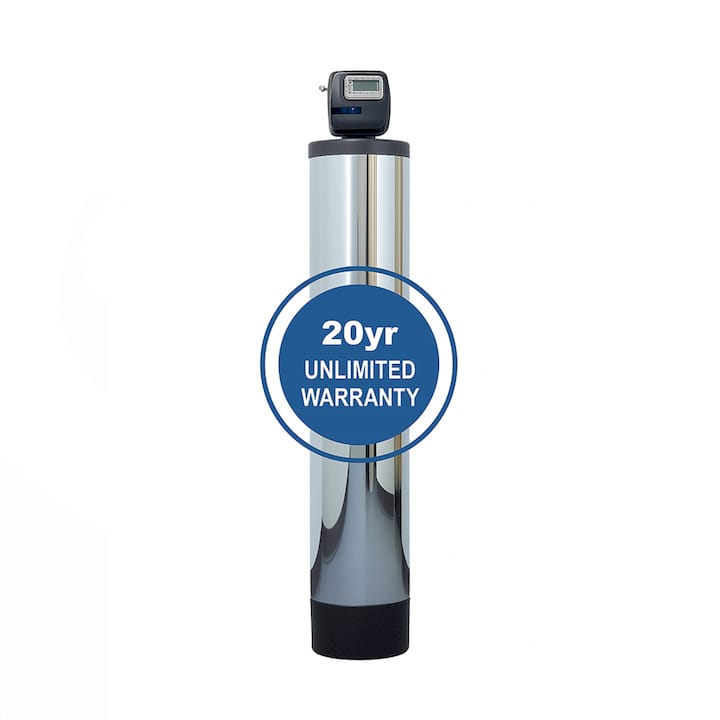
Manganese greensand and Birm are media-based oxidation and filtration systems that work well when manganese rides alongside iron. Recent research on catalytic and manganese-oxide coated media shows improved removal rates when the media is matched to the right pH and regeneration schedule, since these systems are sensitive to water chemistry drifting outside their sweet spot.
Chemical oxidation plus filtration (typically chlorine injection followed by carbon filtration) is the heavier-duty answer for very high iron levels or confirmed iron bacteria. It needs correct dosing, adequate contact time, and careful handling of the oxidant.
Reverse osmosis removes iron effectively but only at the point of use, like a kitchen tap, and it needs iron prefiltered out beforehand or the membrane fouls fast.
Ozone and advanced catalytic systems step in when you’re facing bacterial contamination alongside iron, or multiple contaminants at once, since ozone’s oxidizing power handles jobs that lighter methods can’t.
Pro Tip: Avoid feeding a water softener water containing visible rust or slime. Sequence a sediment or oxidation stage ahead of it, or you’ll be replacing fouled resin within a year.
How to choose the right iron removal system for your home
Work through this in order, and you’ll avoid the single most expensive mistake in well water treatment: buying equipment that doesn’t match your water.
- Read your lab results first. Total iron, dissolved iron, manganese, and pH all shape the decision.
- Identify the iron species. Ferrous, ferric, or bacterial iron each point toward a different technology.
- Check pH and manganese together. Both affect how well oxidation media performs and how often it needs regeneration.
- Match the method to concentration. Sequestration for trace amounts, AIO or greensand for moderate dissolved iron, chemical oxidation for high concentrations or bacteria.
- Size the system to your peak flow, not your average flow. A system sized for a quiet Tuesday morning will bottleneck during a Saturday of laundry, dishes, and showers back to back.
Ask any installer about media type, how often it regenerates or backwashes, what the warranty covers, whether service visits are available locally, and whether any chemicals involved need special handling. If your test confirms iron bacteria, high iron concentrations, or manganese layered on top of iron, professional installation with a warranty is worth the cost. Straightforward low-level ferric iron with clean pH is sometimes manageable with a simpler DIY sediment setup, but anything more complex benefits from a technician who’s matched systems to raw well water before.
Maintenance, troubleshooting, and when systems fail
Every iron removal system needs upkeep, and skipping it is how a working system quietly stops working.
- Backwash media-based filters on the schedule your installer sets, typically every few days depending on iron load and household usage.
- Replace or regenerate media at the interval specified for that media type. Waiting until performance drops usually means you’ve already overloaded it.
- Refill chemical feed systems before they run dry, since intermittent dosing is worse than none in some cases.
Watch for warning signs: staining that returns despite a working system usually means media exhaustion or incorrect sizing. A metallic or chemical taste after service can mean an incomplete flush. Reduced flow points to fouling. Frequent regeneration cycles suggest the system is undersized for your actual iron load.
Slimy deposits or a rotten egg smell returning after treatment often signals iron bacteria that survived the first round. The standard fix is shock chlorination of the well itself, followed by a full system service, since biological films can shield dissolved iron from oxidants until the bacteria are cleared out.
Pro Tip: Keep a simple log of backwash dates and water appearance. A five-minute monthly glance catches fouling long before staining returns.
Purewavewater’s approach to diagnosing and treating iron problems
Guesswork is the expensive way to solve an iron problem, and it’s avoidable. The process starts with an on-site screening, followed by accredited lab sampling to determine iron form and concentration, then a technology and sizing recommendation built around those actual numbers, not assumptions. Installation and a defined maintenance schedule follow.
In practice, that maps to three broad categories: a hybrid backwashable system for mixed particulate and oxidized iron, an air-injection hybrid for dissolved ferrous iron, and an enhanced ozone system for bacterial or multi-contaminant cases. You can review the full service list at Purewavewater.
Why homeowners overthink iron removal, and where they actually go wrong
Most homeowners treat iron removal like a shopping decision instead of a diagnostic one. They read a forum thread, see someone recommend a specific filter, and buy it without ever confirming whether their iron is ferrous, ferric, or bacterial. That’s backwards. The technology should follow the lab result, not the other way around.
The bigger misconception is thinking cheaper always means smarter. A polyphosphate feeder costs less upfront than an air-injection system, but it never actually removes iron, it just delays the visible symptoms. If your dissolved iron creeps past a couple of milligrams per litre, sequestration quietly fails and you’re staring at rust stains again within months, having spent money on a system that was never built to solve your actual problem.
We’d also push back on the idea that a water softener is a universal fix. Softeners were built for hardness, not iron, and feeding one oxidized water is one of the fastest ways to void a warranty through resin fouling that nobody tells you about until the repair bill arrives. The correct sequence, prefilter or oxidize first, soften second, matters more than which brand of softener sits in your basement.
The honest takeaway: iron problems are solvable almost every time, but only when the diagnosis comes before the purchase.
— Purewavewater
How Purewavewater can help you fix it, not just filter it
An edge over trial-and-error shopping is simple: you get a lab-backed diagnosis before you spend a dollar on equipment, so the system you install is sized and matched to your actual water instead of a guess pulled from a forum thread.
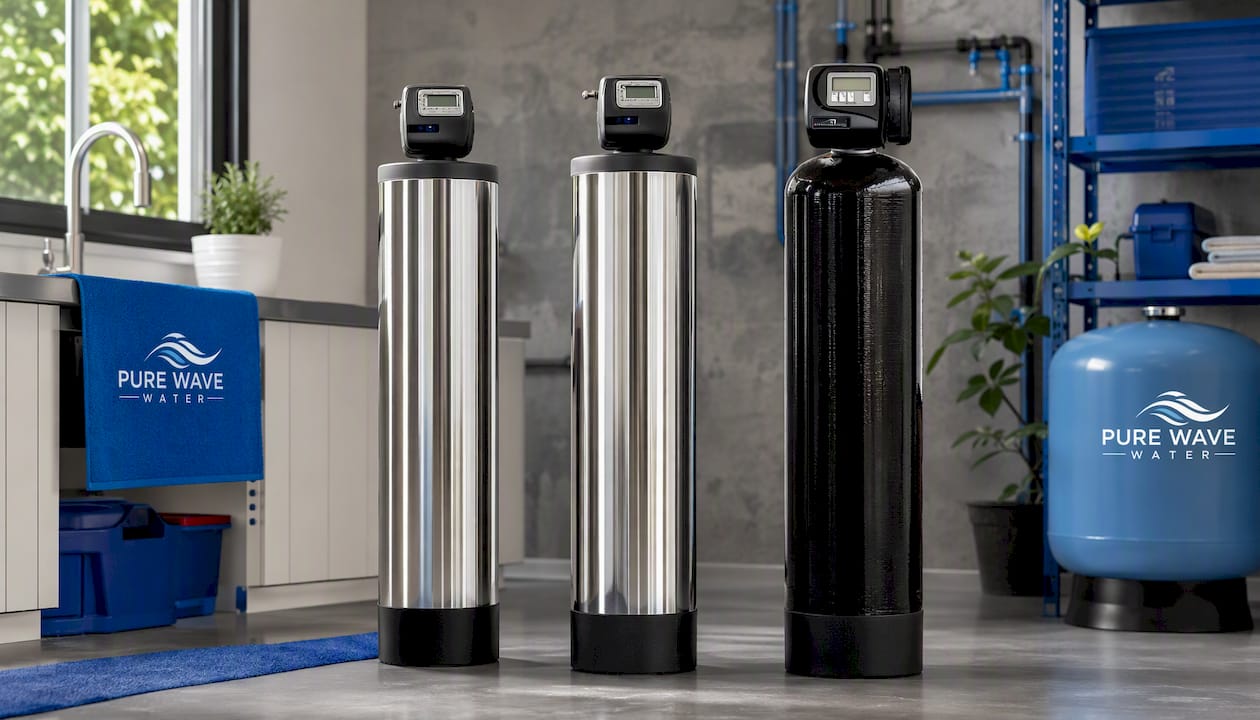
If your test points to mixed particulate and oxidized iron, the Zentec Value Hybrid Iron, Sulphur, and Manganese Backwashable Filter handles that combination in a single backwashable unit. For dissolved ferrous iron where a chemical-free approach fits better, the Zentec Premium Air Injection Hybrid Capsulate Iron, Sulphur, and Manganese Filter uses air injection to oxidize and filter in one pass. And where iron bacteria or several contaminants are stacked together, the Zentec Superior Enhanced Ozone Capsulate Filter With Generator brings the stronger oxidizing power the job needs.
Order directly through the online store, book a water test or installation, or reach out to a water treatment team for help sizing the right system to your actual results.
Sources

Written by the Pure Wave Water team, who test, install and service water treatment systems across Georgetown and Halton Hills.