

Mild acids dissolve limescale, and citric acid or white vinegar are your best starting points for most jobs around the house. Appliances need boil-and-soak cycles with a full rinse afterward, while chrome, grout, and glass need shorter contact times to protect the finish. Always ventilate the room, wear gloves with stronger products, and test a small area first.
TL;DR:
- Citric acid is the most convenient household option because it acts faster and is gentler on appliance components compared to vinegar or commercial descalers.
- Longer contact times and proper surface-specific procedures are crucial; overexposure can damage finishes on chrome, grout, or porcelain.
- Heating the acid solution with warm water speeds up the descaling process, reducing treatment time nearly by half.
- Regular treatment frequency varies with water hardness, typically monthly for hard water and quarterly for softer water, to prevent scale buildup.
- Whole-home water softening systems significantly reduce recurring scale issues and energy costs, especially if water tests reveal high mineral content.
Table of Contents
- Fast decision guide: vinegar, citric acid, lemon, or a commercial descaler
- Step-by-step removal for showerheads, taps, tiles, glass, and toilets
- How to descale kettles, coffee machines, irons, and shower filters safely
- Everyday habits and whole-home options that cut limescale for good
- Pure Wave Water’s practical advice: test first, then treat
- What years of scale complaints teach you about the advice people actually follow
- Ready to stop fighting the same scale every month?
- Sources
- FAQ
Fast decision guide: vinegar, citric acid, lemon, or a commercial descaler
Limescale is calcium and magnesium left behind when hard water evaporates, and it’s genuinely insoluble in water alone. That’s why scrubbing with soap and a sponge rarely works. You need a mild acid to break the mineral bond, and the right acid dissolves it without damaging what’s underneath.
Here’s how the main options stack up against each other:
- White vinegar: cheap, sold everywhere, and reliable on light to moderate buildup. It’s roughly 5% acetic acid, which means it works more slowly than citric acid and often needs a longer soak or a repeat treatment to fully clear.
- Citric acid powder: faster acting, food safe, and far less pungent than vinegar. This is the better choice for kettles, coffee makers, and anything you don’t want smelling like a salad dressing afterward.
- Lemon juice: gentle and low odour, but you need a surprising number of lemons to match what a spoonful of citric acid powder does. The natural sugars in lemon juice can also leave a sticky film if you don’t rinse thoroughly.
- Commercial descalers: usually sulfamic-acid-based, these work fastest on heavy, crusted scale. They’re also the most likely to damage soft metals or plated finishes if you leave them on too long, so contact times on the label matter more here than with any household acid.
- Bicarbonate of soda: not a limescale dissolver at all. It’s a mild abrasive that helps lift surface staining and soap residue, useful as a finishing scrub after the acid has done its real work.
For most homeowners, citric acid earns the top spot on convenience alone. Consumer testing has found that citric acid sachets and eco-formulated descalers perform as well as harsher chemical blends on kettles, while being gentler on rubber seals and plastic components.
If a first treatment doesn’t fully clear the deposit, don’t reach for a stronger chemical right away. Try a second soak with the same product, or add light mechanical scrubbing with a soft brush first. Loosening flaky scale before you apply acid genuinely speeds up the whole process, because the acid can reach fresh mineral surface instead of working through a thick crust from the outside in.
Pro Tip: Warm (not boiling) liquid speeds up any acid reaction. A citric acid soak in warm water can cut your wait time nearly in half compared to using cold tap water straight from the faucet.
Step-by-step removal for showerheads, taps, tiles, glass, and toilets
Different surfaces call for different contact times, and that’s the piece most cleaning advice skips. Chrome and plated fixtures can pit or dull if you leave acid on too long; grout and porcelain can handle a longer soak. Here’s how to approach each one properly.
Showerheads
- Detach the showerhead if possible and submerge it fully in a bowl of white vinegar or a citric acid solution (roughly one tablespoon of citric acid powder per cup of warm water) for 30 to 60 minutes.
- If it’s fixed to the wall, fill a sandwich bag with the same solution, wrap it around the head, and secure it with a rubber band or twist tie so the nozzles stay submerged.
- After soaking, scrub the nozzle holes gently with an old toothbrush to dislodge anything the acid loosened.
- Run hot water through the showerhead for at least a minute to flush out any remaining acid and loosened debris.
Taps and chrome fixtures
Soak a cloth or paper towel in white vinegar, wring it out slightly, and wrap it around the affected area for no more than 15 to 20 minutes. Plated chrome and brushed nickel finishes are more delicate than raw stainless steel, and leaving acid on too long can cause dulling or pitting over repeated treatments. Rinse thoroughly and dry the tap immediately with a soft cloth. Water left to air-dry on chrome just leaves new limescale spots, so this last step matters more than people expect.
Tiles and grout
Dilute your acid of choice (a 1:1 vinegar-and-water mix works, or a citric acid solution) and apply it with a spray bottle or sponge. Let it sit five to ten minutes, then scrub gently with a soft-bristle brush. Grout is more porous than tile and can hold onto acid residue, so rinse the area twice with plain water and wipe dry.
Glass and shower screens
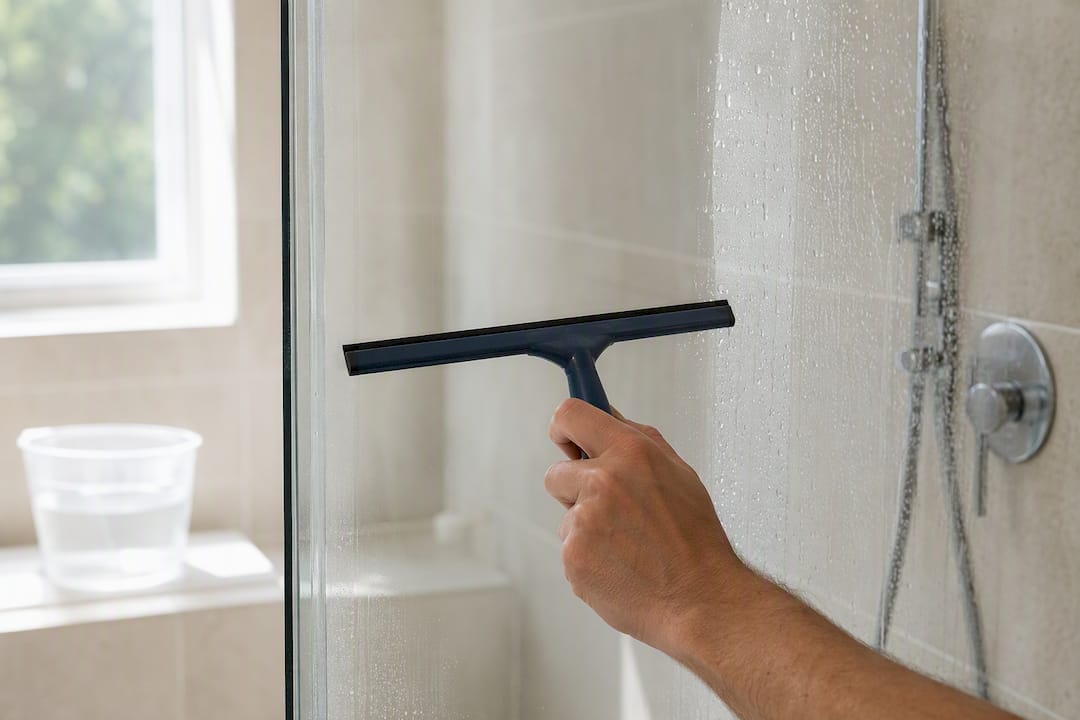
Citric acid tends to give the cleanest, least streaky finish on glass because it doesn’t leave the faint film vinegar sometimes does on non-porous surfaces. Spray or wipe it on, let it sit for a few minutes, scrub lightly with a non-abrasive cloth, then rinse and squeegee the glass immediately. That squeegee step is the real long-term fix. Dried water droplets are exactly what turns into new scale, so wiping the glass dry after every shower prevents most of the buildup you’re currently fighting.
Toilets
For a toilet bowl with visible ring staining below the waterline, pour one to two cups of white vinegar directly into the bowl and let it sit for at least an hour, ideally overnight for heavier deposits. For thick, calcified buildup, a commercial toilet-bowl descaler will work faster; follow the label’s contact time exactly, since these products are formulated stronger than a household acid. Scrub with a toilet brush, then flush.
Whenever you’re using a commercial descaler on any surface, ventilate the bathroom, wear gloves, and test an inconspicuous spot first. Some formulations are strong enough to damage certain finishes or grout sealants if the manufacturer’s contact time is exceeded.
How to descale kettles, coffee machines, irons, and shower filters safely
Appliances need a slightly different approach than surfaces, because you’re dealing with heating elements, internal tubing, and parts you can’t see or scrub by hand. Getting the ratios and rinse cycles right matters more here than anywhere else in the house.
Kettles: Mix roughly one part white vinegar to two parts water, or dissolve two to three tablespoons of citric acid powder into a full kettle of water. Bring it to a boil, then let it sit (off the heat) for 20 to 30 minutes. Pour it out, then boil and discard two to three full cycles of plain water before you make tea or coffee with it again. Citric acid dissolves scale faster and with less lingering odour than vinegar, which is why it’s the better everyday choice for anyone descaling monthly.
- Vinegar works fine but often needs a longer soak and more rinse cycles to clear the smell completely.
- Citric acid is food-safe, faster-acting, and rarely needs more than one extra rinse-boil.
- For thick, crusted buildup, a sulfamic-acid commercial kettle descaler will cut through it faster than either household option, but always follow the printed contact time.
Coffee machines: Use a manufacturer-approved descaler where one exists. Espresso machines and drip coffee makers have narrow internal tubing that scale can partially block over time, and generic acids sometimes react differently with the machine’s internal seals than the tested descaler does. For pod machines, most manufacturers recommend running a vinegar-and-water or dedicated descaling solution through a full brew cycle, followed by two plain-water cycles.
Irons and steamers: Run your descaling solution through the steam cycle as directed in the manual, then rinse the water reservoir several times with plain water before your next use. Mineral buildup in an iron’s steam vents is a common cause of spitting and staining on fabric, so this is worth doing the moment you notice reduced steam output.
Shower filters and replaceable cartridges: Soak per the manufacturer’s instructions, or simply replace the cartridge if it’s due. A drop in water pressure or flow through a shower filter is often the first sign scale has clogged the internal media.
A thin, one millimetre layer of scale sitting over a heating element noticeably reduces how efficiently heat transfers into the water, forcing the appliance to run longer and use more energy to do the same job. That’s the quiet cost of skipping descaling: it’s not just cosmetic, it’s your electricity bill. If an appliance is still underperforming after a proper descale, or if you notice discoloured water, strange smells, or a burning odour when it heats, that usually points to element damage rather than scale, and it’s time to call a technician instead of trying another round of vinegar.
Everyday habits and whole-home options that cut limescale for good
Descaling is maintenance, not a cure. If your water is hard, the deposits will always come back, so the real win is stretching the time between treatments and reducing how much scale forms in the first place.
A few small habits make a real difference:
- Empty your kettle after each use instead of leaving standing water to evaporate and concentrate minerals.
- Squeegee shower glass and wipe down taps after every use so water doesn’t sit and dry on the surface.
- Boil only the water you need. Less standing water means less mineral residue left behind when it cools.
How often you should descale depends heavily on how hard your local water is. Regular descaling on a schedule, anywhere from monthly to quarterly depending on hardness, keeps appliances running efficiently and prevents the buildup that leads to off-flavours in tea, coffee, and drinking water.
If you’re descaling more than once a month and still seeing white flakes in your kettle within weeks, that’s a sign it’s time to look at the water itself rather than the symptom. Water softeners exchange calcium and magnesium ions for sodium, which prevents scale from forming throughout your whole home, though they do require regeneration salt and periodic maintenance. Reverse osmosis and ultrafiltration systems remove minerals at the point of use, which means cleaner drinking and cooking water, but they don’t touch the scale forming in your pipes, water heater, or shower.
A free in-store water test is the fastest way to find out which category your water actually falls into, and to match the fix to the real problem rather than guessing.
Pure Wave Water’s practical advice: test first, then treat
We’ve been helping homeowners solve water problems since 1995, and the single biggest mistake we see is people buying a system before they know what’s actually in their water. Free in-store water testing for hardness, iron, and other quality concerns tells you whether you need a softener, a filtration system, or simply a better drinking-water solution at the tap.
Hardness readings change everything about the recommendation. A property with moderately hard water might only need a point-of-use system for drinking water, while genuinely hard water usually calls for a whole-home softener to stop scale from forming in the first place.
For readers who only need cleaner water at the tap rather than a whole-home overhaul, three products cover most situations: the Smart Purifier™ Plus RO Faucet – Chrome reduces minerals right at the point you drink from, the Excalibur Ultrafiltration Drinking System tackles particulates and scale-contributing minerals with a different filtration method, and the LG LT1000P/PC/PCS Fridge Filter keeps fridge-dispensed water and ice tasting clean. If scale keeps returning inside a water heater, boiler, or if an appliance element has already failed, that’s a job for a local technician rather than another vinegar soak.
What years of scale complaints teach you about the advice people actually follow
Most limescale advice online treats every surface the same, and that’s the gap worth closing. Vinegar gets recommended for showerheads, taps, kettles, and toilets alike, when the truth is that contact time and material matter as much as the acid itself. A chrome tap and a porcelain toilet bowl do not tolerate the same soak.
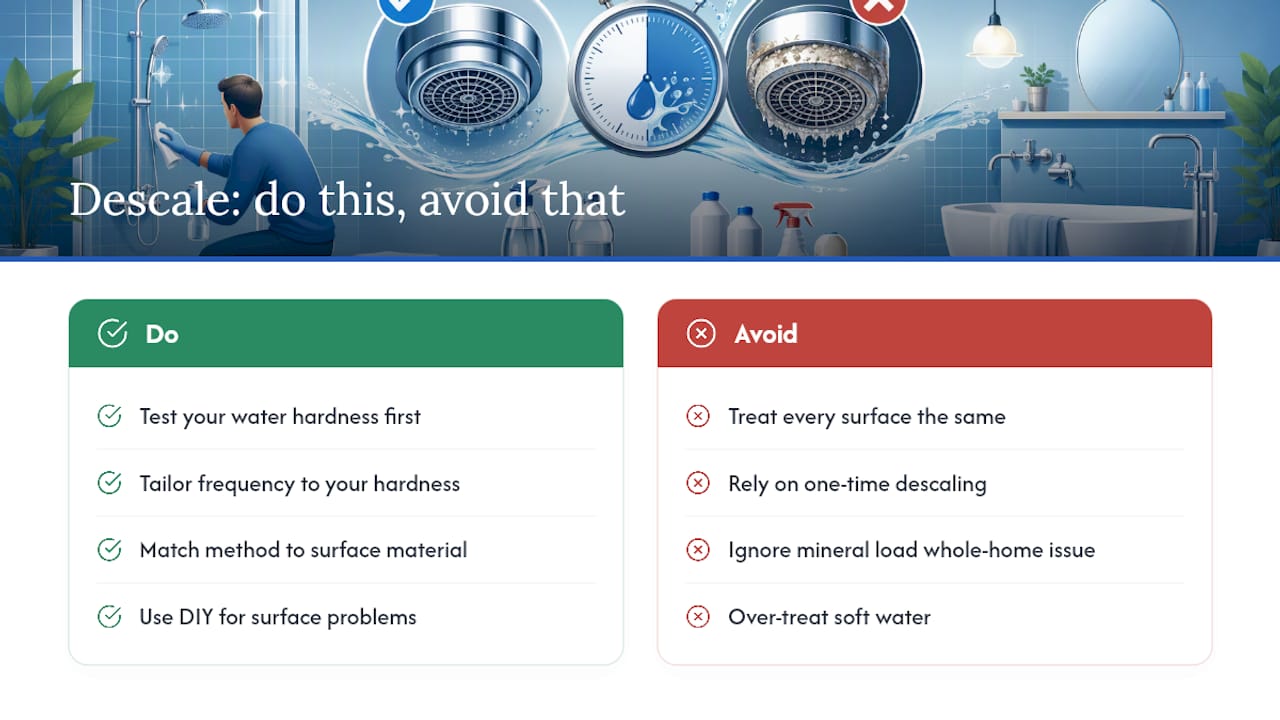
The bigger blind spot is frequency. People treat descaling as a one-time fix rather than an ongoing maintenance rhythm tied to their actual water hardness, so they’re either over-treating soft water or under-treating hard water and wondering why the scale keeps winning. That’s the real value of a water test: it turns guesswork into a schedule.
If there’s one thing worth prioritizing over any specific acid or product, it’s this: figure out how hard your water actually is before you decide how hard you need to fight it. DIY descaling handles the surface problem well. It does nothing for the mineral load feeding it, and that’s where a whole-home decision belongs.
— CloudSprout16
Ready to stop fighting the same scale every month?
A local water treatment company can provide a free in-store water test that identifies the minerals in your water, helping match you with the right product instead of a guess. If your kettle, taps, and glass keep clouding up no matter how often you descale, the hardness reading is the missing piece.
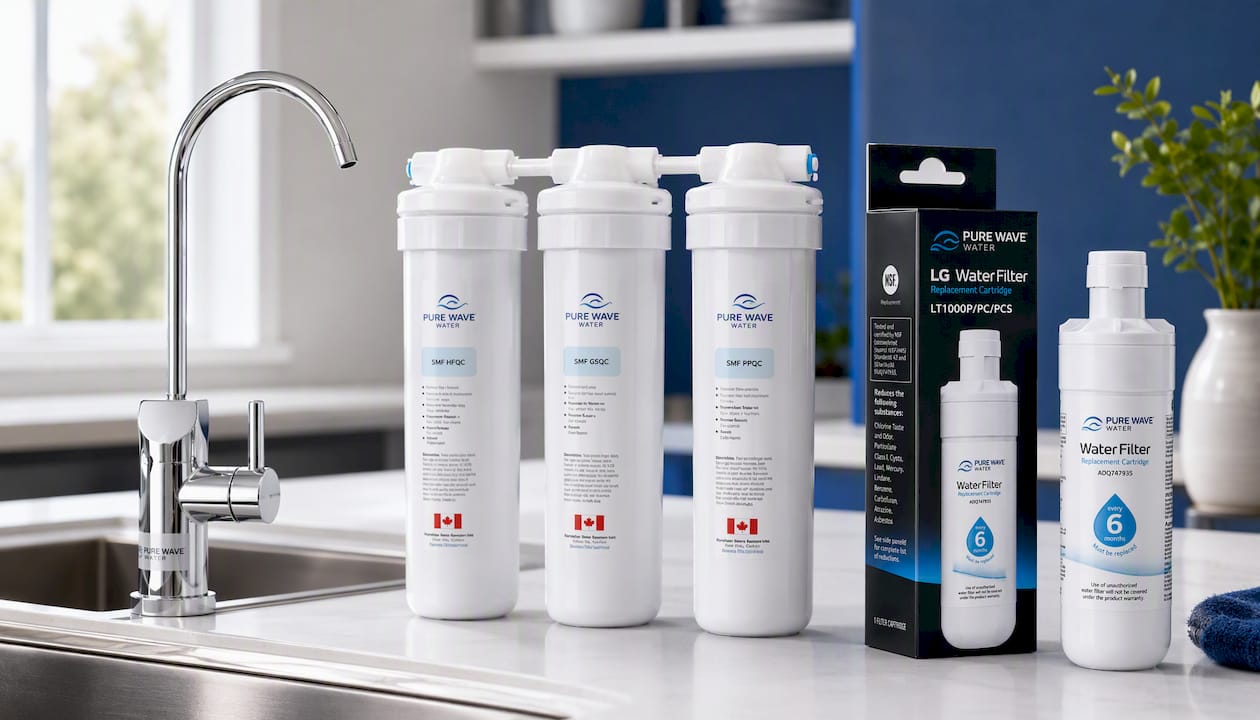
For cleaner water right at the tap, the Smart Purifier™ Plus RO Faucet reduces the minerals feeding your scale problem before they ever hit your glass, while the Excalibur Ultrafiltration Drinking System offers another point-of-use route depending on what your test shows. Keeping fridge water and ice clear is as simple as swapping in the LG fridge filter on schedule, and you’ll find replacement cartridges and parts at the Pure Wave Water shop whenever you’re due for a change. Book a water test and get professional recommendations tailored to your home’s water quality.
Sources
The descaling methods, contact times, and safety notes in this guide draw on tested consumer cleaning guidance and appliance care resources, including:
- How to descale a kettle – the best methods using household products | BBC Good Food
- How to Descale a Kettle Properly (UK Hard Water Guide) | RepairHabit
- How to remove limescale from your kettle | Which?
- How to remove limescale | The Guardian
FAQ
How do you remove hardened, thick limescale?
Soak the area longer than usual, ideally overnight, with citric acid or a commercial sulfamic-acid descaler, and loosen flakes with a soft brush before reapplying the acid. Thick, calcified deposits usually need two or three treatment cycles rather than one strong application.
Does WD-40 really remove limescale?
WD-40 is a lubricant and rust penetrant, not an acid, so it does not dissolve calcium carbonate like vinegar or citric acid does. Stick with a proper acid-based descaler for actual limescale removal.
Does vinegar and baking soda together remove limescale?
Vinegar and baking soda mixed together neutralize each other into a mild saltwater solution, which weakens the vinegar’s descaling power. Use vinegar on its own for dissolving scale, and save baking soda for a separate abrasive scrub afterward.
What dissolves hard water scale?
Mild acids dissolve hard water scale by breaking down the calcium and magnesium carbonate bonds. Citric acid, white vinegar, and lemon juice all work on light to moderate buildup, while commercial sulfamic-acid descalers handle heavier deposits faster.
How often should I descale to stop limescale coming back?
Frequency depends on local water hardness, but a general rule is monthly for hard water areas and quarterly for softer water. If you’re descaling monthly and still seeing buildup within weeks, a free water test through Pure Wave Water can confirm whether a whole-home softener would solve the problem at the source.

Written by the Pure Wave Water team, who test, install and service water treatment systems across Georgetown and Halton Hills.