
Reverse osmosis (RO) is an excellent starting point for coffee water, but plain RO output is rarely the finish line. An RO membrane removes most dissolved minerals, and coffee needs some of them (mainly magnesium, calcium and bicarbonate) to extract flavour properly. The best results come from RO water that is blended or remineralized to a controlled mineral level, and from a system that protects the membrane and your machine.
This guide explains what RO does to coffee water, what to aim for, why RO water sometimes tastes flat, metallic or like plastic, and how to set up a system in a hard-water region like ours.
TL;DR
- RO strips most minerals. Water at or near 0 ppm TDS tends to taste flat and can cause boiler corrosion and sensor problems in some espresso machines.
- Aim for a balanced mineral profile, not purity. A commonly cited target is 50 to 150 ppm TDS, reached with a blending valve or a remineralization stage. Always check your machine’s manual first.
- If your tap water is very hard, soften it before the RO membrane to protect it.
- Off tastes from an RO tap (metallic, plastic, stale) usually point to old filters, a tank that needs sanitizing, or a new system that was not flushed.
- We offer free in-store water testing in Georgetown, so you can see what is in your water before you buy anything.
Table of Contents
- What reverse osmosis does to coffee water
- What TDS should you aim for?
- Why your RO water tastes bad
- RO water in espresso machines and brewers
- Protect the membrane: soften first if your water is hard
- Three ways to set up RO for coffee
- Our perspective
- Get your water tested, then choose the system
- Commercial and café water
- FAQ
- Sources
What reverse osmosis does to coffee water
A cup of coffee is roughly 98 to 99 per cent water, so what is dissolved in it shapes the flavour as much as the beans do. RO pushes water through a semipermeable membrane that rejects most dissolved salts, metals and many other contaminants. What comes out is very soft, very low in minerals, and clean.
That sounds ideal, and for removing chlorine taste, sediment and unwanted dissolved solids it is. But the Specialty Coffee Association (SCA) describes the goal differently: balance, not purity. Carbon filtration reduces substances that affect aroma, while RO and mineralization let you build a consistent profile whatever your raw water looks like.
Think of RO as a blank page. It removes what your municipal or well supply brings with it, and then you decide what goes back in.
Why minerals matter for extraction
Magnesium and calcium help pull flavour compounds out of ground coffee, and bicarbonate (alkalinity) buffers acidity. The SCA’s own writing notes that for choosing coffee water, alkalinity matters more than pH. Water with almost nothing in it often produces a thin, sharp or bitter cup, because there is little to carry the flavour.
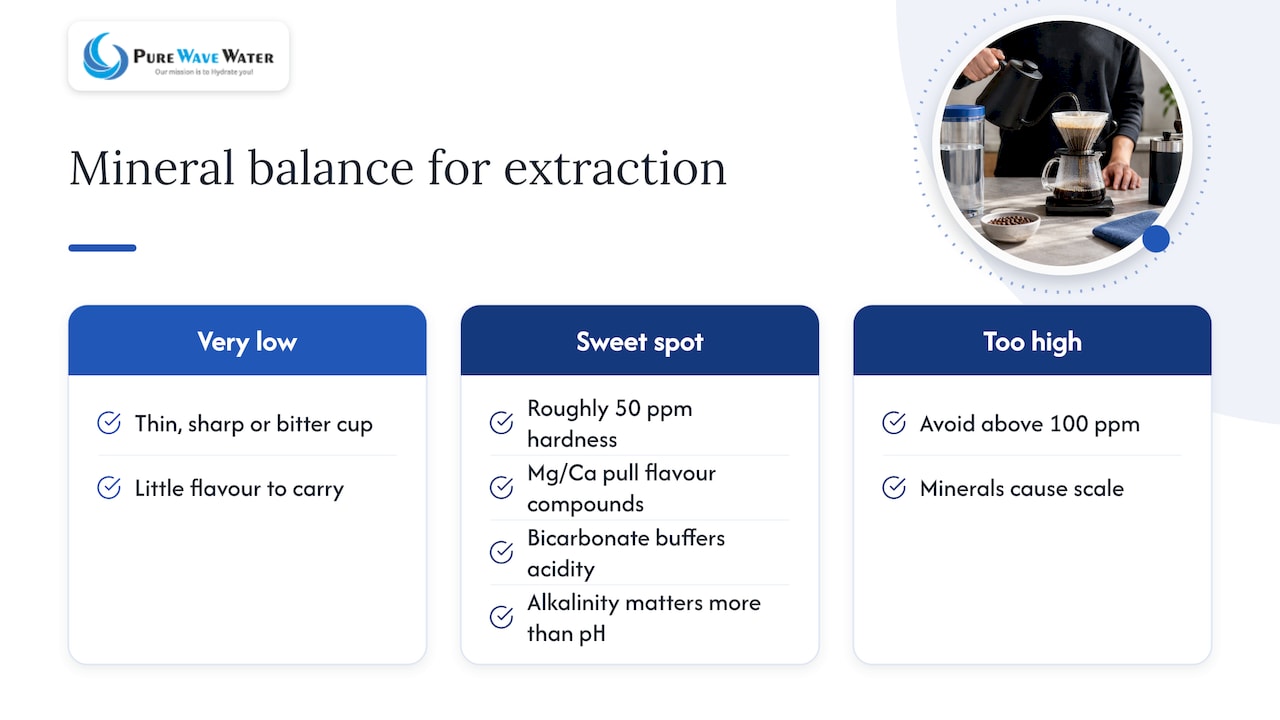
On the other side, too many minerals cause scale. The Espresso Aficionados guide suggests aiming for roughly 50 ppm hardness and avoiding anything above 100 ppm in espresso machines. The sweet spot sits between the two extremes.
What TDS should you aim for?
TDS (total dissolved solids) is the quick number most people use. Industry sources commonly point to a range of about 50 to 150 ppm for brewing, with the SCA’s guidance sitting toward the upper end of that range. Your espresso machine maker may ask for something different, so treat the manual as the final word.
| Water type | Typical TDS | What to expect |
|---|---|---|
| Straight RO output | Near 0 to 20 ppm | Clean but flat, can trip machine sensors |
| RO blended or remineralized | About 50 to 150 ppm | Balanced extraction, lower scale risk |
| Very hard tap water | Well above 150 ppm | Scale, muddy flavour, shorter appliance life |
Two cautions apply when you measure.
- Use the right meter. Every TDS meter is really measuring electrical conductivity, and many inexpensive meters are calibrated to a salt standard. The SCA notes that these read differently from the standard used for coffee water, so compare readings only with a meter calibrated for the purpose.
- TDS is not the whole story. Two waters with the same TDS can have very different hardness and alkalinity. TDS tells you roughly how mineralized the water is, not which minerals are in it.
Why your RO water tastes bad
If you already have an RO tap and the water or the coffee tastes off, the cause is usually one of the following. These are practical observations from servicing systems, not guarantees, so a test is the best way to confirm.
Metallic taste
Very low-mineral water can taste sharp or metallic because there is nothing to soften the edge. Water that sits in a metal tap or a tank can also pick up a metallic note. If your source water has iron or manganese, have it tested too: RO helps, but heavy loads foul the membrane and pre-filters. If you are on a well, see our guide to manganese in well water.
Plastic taste
A plastic taste is common in a brand-new system, new tubing or a fresh storage tank that has not been flushed. Most manufacturers instruct you to run and discard the first tank or two. If it persists, the tank bladder, a worn fitting or an overdue filter set may be responsible, and a technician can check it.
Flat, stale or “empty” taste
This is the mineral issue described above. It is not a fault: the system is doing exactly what RO does. The fix is remineralization or blending, not a new membrane.
A quick checklist for improving RO taste
- Replace pre-filters and the carbon post-filter on schedule. Spent carbon stops removing chlorine and organics.
- Flush a new system or new filters fully before judging the taste.
- Sanitize the system and tank during filter changes, following the manufacturer’s instructions.
- Measure TDS at the tap. If it is near zero, add a remineralization stage or blend in a controlled amount of filtered water.
- Use fresh water. Water that has sat in the tank for days can taste stale.
RO water in espresso machines and brewers
How your machine treats water decides how much you need to adjust.
Espresso machines with boilers. 1st-line explains that purified waters such as RO, distilled and deionized are generally not suitable for heat exchanger or dual boiler machines on their own. Pure water seeks to pick up minerals and can attack copper and other metals, and many machines also need a minimum conductivity for their water-level sensors to work. The same source covers the corrosion risk of 0 TDS water in more detail.
Low-mineral specialist machines. Some manufacturers go the other way. Decent Espresso notes that very low-mineral water, under 30 ppm TDS, can remove the need for descaling, but it frames this as a specialized choice that depends on your machine’s boiler and sensors. Read your own manufacturer’s recommendations before copying anyone else’s recipe.
Pod and drip machines. For Keurig-style and other home brewers, Breville’s support guidance is that you should use fresh, cold water that meets your machine’s manual. Fully demineralized water can cause sensor issues in some models, so a lightly remineralized or blended supply is the safer route.
Do coffee shops use RO? Many do, but not RO alone. Forum discussions among professionals describe the usual chain: pre-filtration, a water softener ahead of the RO, then RO and a controlled mineral profile. That chain is what produces consistent water.
Protect the membrane: soften first if your water is hard
RO membranes dislike hardness. Calcium and magnesium form scale on the membrane surface, which lowers output and shortens its life. Experienced users in the coffee-equipment community recommend putting a softener ahead of the RO when source water is very hard, around 10 grains or more. That is community guidance rather than a manufacturer rule, so treat it as a rule of thumb and have your own water tested.
In the Georgetown and Halton Hills area, plenty of homes are on hard municipal or well water, and that is why we test first. If you want to understand the cost side of softening, read our guide to water softener costs in Ontario, and if you are seeing white deposits on your kettle or faucets, our page on removing limescale safely explains what the buildup means.
A softener on its own is not a coffee solution either. It swaps hardness minerals for sodium, which is why softened water often goes through RO for drinking and brewing. If you run a softener, the salt you choose also matters, and we cover that in our guide to water softener salt.
Three ways to set up RO for coffee
| Setup | Best for | Trade-off |
|---|---|---|
| Under-sink RO with a remineralization or blending stage | Home brewers who want one tap for drinking and coffee | Needs the right stage fitted and a TDS check |
| Whole-home softener plus under-sink RO | Hard-water homes with an espresso machine | Higher upfront cost, best long-term protection |
| Straight RO, then mineral additions by recipe | Enthusiasts who want to control every variable | More effort, needs an accurate meter |
If you are comparing a design with a bypass or remineralization stage, one Swedish guide to choosing a reverse osmosis system for the home walks through the main system types, though it is written for the Swedish market.
For a single machine in a home with decent water, a small under-sink RO with a mineral stage is usually enough. For a hard-water home or a café with several machines, a multi-stage setup in one location tends to cost less over time than scattered inline filters that get forgotten, a point industry veterans make repeatedly.
Our perspective
We have been testing and treating water in Georgetown since 1995, and the pattern we see with coffee is consistent: people buy a reverse osmosis system hoping for better coffee, then find the water tastes flat, so they blame the system. Most of the time the system is working. It simply has no mineral stage, or the pre-filters are overdue, or the home has hard water that is wearing out the membrane.
So we start with a free in-store test for hardness, iron and the other concerns you bring in, and we recommend only what the results justify. Sometimes that is an RO system. Sometimes it is a softener ahead of one. Sometimes it is just fresh filters. We would rather you spend on the right fix once.
Our technicians install and service the systems we sell and most major brands, with written quotes, and we keep the replacement filters, cartridges and membranes you will need over the years. For coffee, we suggest treating the water as part of the brewing equipment: pick a target, measure it, and keep the filters changed on schedule.
— CloudSprout16
Get your water tested, then choose the system
If you are in Georgetown or Halton Hills, bring a water sample to us for a free in-store test. We will tell you where your hardness and other readings sit, and whether you need RO at all, a softener first, or just a filter swap. You can find out more on our home page.
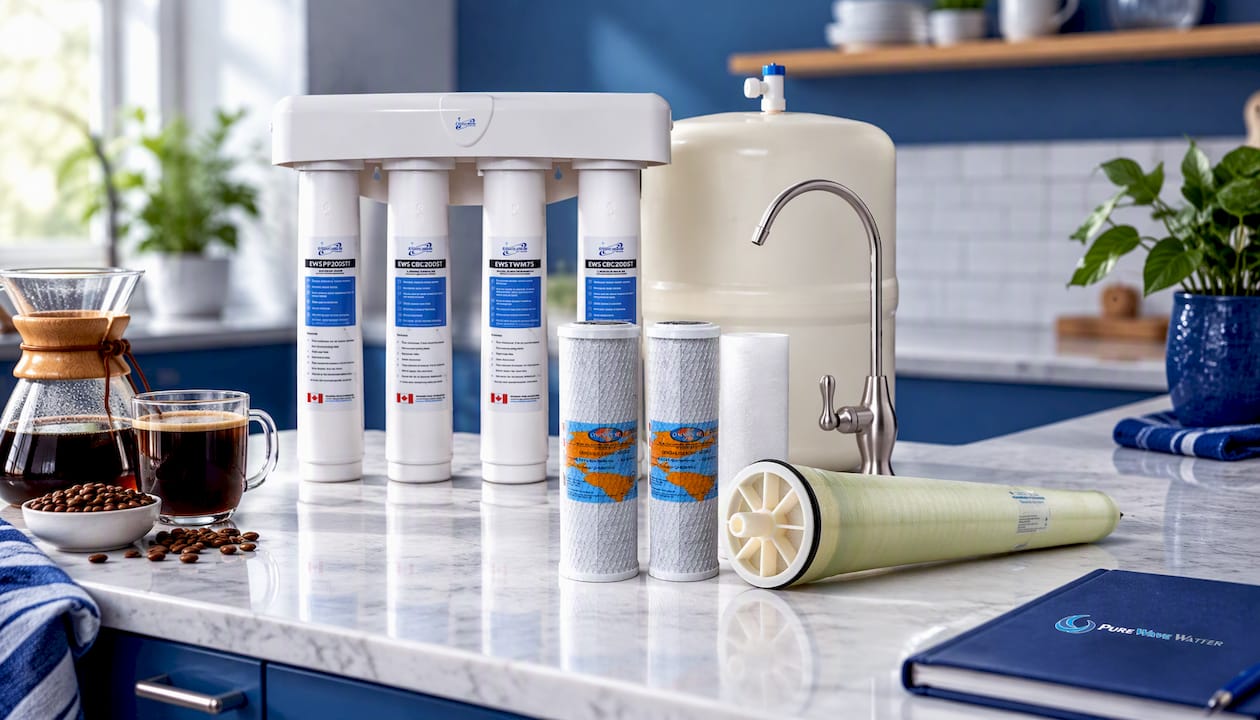
When you are ready to buy, our online shop lists reverse osmosis systems, filters, membranes and water treatment supplies. You can start with the Sureflo Preferred Reverse Osmosis System or restock with the Reverse Osmosis 3 Pack Filters. If you want a technician to fit it or service an existing unit, see our installation and repair services.
Commercial and café water
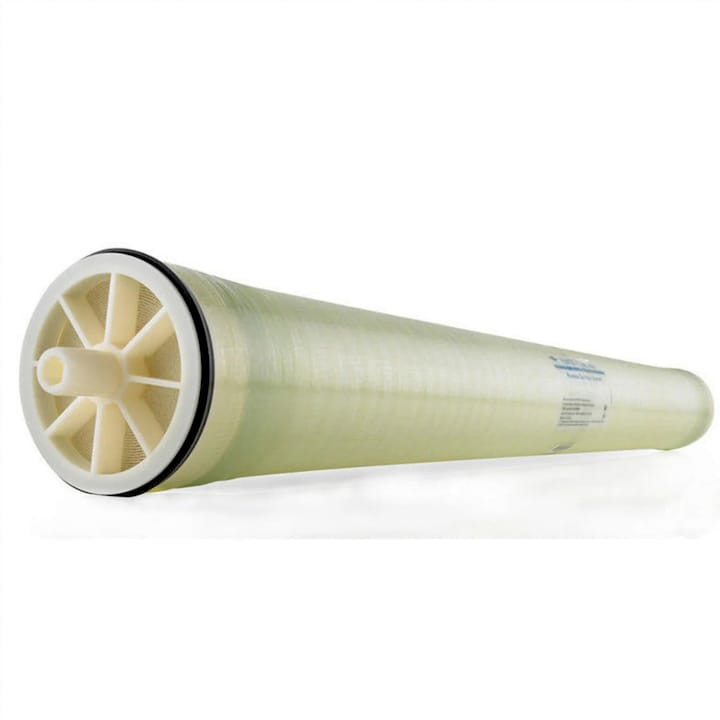
Businesses with several machines or ice makers face the same balance on a bigger scale. Hardness damages boilers and ice machines, while zero-mineral water can upset sensors. A commercial setup usually combines pre-filtration, softening and RO, with the output blended to a set mineral level. We also stock commercial systems and large-format membranes, such as the BW30 Pro-4040 FilmTec commercial RO membrane, and can quote installation and maintenance. Bring your machine manual and we will compare its water requirements against your test results.
The SCA has also noted that commercial brands now sell systems that remineralize RO water specifically for coffee, which shows how mainstream the approach has become.
FAQ
Is reverse osmosis water good for coffee?
It is a good base, but usually not good on its own. RO removes most minerals, and coffee extracts best with some magnesium, calcium and alkalinity present. Blend it or remineralize it to a target in the range your machine’s manufacturer recommends.
Can I use RO water in my Keurig or espresso machine?
Often yes for pod and drip brewers, provided the water is not completely demineralized, since very low conductivity can confuse some sensors. Heat exchanger and dual boiler espresso machines are more sensitive, and many makers advise against straight RO water. Check your manual before you switch.
Why does my RO water taste metallic or like plastic?
A plastic taste usually comes from a new system, tubing or tank that has not been flushed enough, or from an overdue filter. A metallic or flat taste often comes from very low mineral content, or from iron in the source water. Replacing filters, sanitizing and flushing the system, and having your water tested will usually pinpoint it.
Do I need a water softener before reverse osmosis?
If your water is very hard, a softener ahead of the RO helps protect the membrane from scale. Coffee-equipment communities suggest this at around 10 grains of hardness and above. A free water test shows whether it applies to you.
Sources
- The Quest for Coffee Perfection, Specialty Coffee Association
- Water and Coffee Acidity, Specialty Coffee Association
- Addressing Water Quality Issues: The TDS Meter, Specialty Coffee Association
- Perfectly Mineralized Water for Coffee, Specialty Coffee Association
- Water, Espresso Aficionados
- Espresso Machine Water, 1st-line
- Water recommendations for the DE1 and Bengle, Decent Espresso
- Support article, Breville
- Water Questions for Espresso, Coffee, and Ice Machine, Coffee Forums
Recommended

Pure Wave Water shares educational content about water treatment, water softeners, reverse osmosis systems, UV purification, and filtration solutions. Our guides help readers understand water quality concerns, explore treatment options, and make informed decisions about their water treatment needs.