
If your main problem is scale and appliance damage, a water softener is the right choice. If your concern is drinking-water contaminants or total dissolved solids, a certified reverse osmosis system does that job, and often the best result comes from using both, in the right order. Testing your water first tells you which path applies to your home.
TL;DR:
- Health Canada considers supplies above 200 mg/L as calcium carbonate poor, and softening is often warranted above 500 mg/L; choose an NSF/ANSI 44 certified model.
- For reverse osmosis, match each contaminant on your test report to the model’s NSF/ANSI 58 certification sheet; a generic certification claim alone is insufficient.
- When both problems occur, put the softener before RO; untreated hardness scales membranes, and RO prefilters usually need replacement every six to twelve months.
- If someone in the household follows a diet that restricts sodium, ask for a kitchen tap bypass because softening adds sodium or potassium to treated water.
Table of Contents
- How water softeners work and what they actually fix
- How reverse osmosis systems work and what they remove
- Which problems each technology actually solves
- Why many homes end up using both systems together
- What to budget for: upfront cost, maintenance, and lifespan
- Sodium, potassium, and mineral removal: what families should know
- A test-first checklist before you buy anything
- Why Pure Wave Water and this guide are worth trusting
- The real cost of skipping the test
- Start with a free water test
- FAQ
- Sources
How water softeners work and what they actually fix
A water softener uses ion exchange: resin beads inside the tank hold sodium or potassium ions, and as hard water passes through, calcium and magnesium swap places with those ions. The resin eventually needs regenerating, a process that flushes accumulated hardness minerals out with a brine rinse. Sodium chloride is the common regenerant, though potassium chloride is an option for households limiting sodium intake, something we cover in more detail in our guide to softener salt choices.
Softeners install at the point where water enters the house, treating everything from showers to laundry to dishwashers. Health Canada notes that supplies testing above 200 mg/L as calcium carbonate are considered poor, and above 500 mg/L softening is often warranted. Once installed, you should notice:
- Less scale buildup on faucets, kettles and shower doors
- Softer laundry and dishes with less soap residue
- Longer service life for water heaters and other appliances that hate mineral buildup
Any softener you consider should carry NSF/ANSI 44 certification, which sets the minimum requirements for residential cation-exchange softeners, according to NSF. Certification confirms the design meets a tested standard, but the specific hardness-reduction claim still depends on the model.
How reverse osmosis systems work and what they remove
Reverse osmosis pushes water through a semipermeable membrane fine enough to block dissolved substances that pass through ordinary filters. A typical under-sink RO system includes one or more prefilters to catch sediment and chlorine, the membrane itself, a small storage tank, and a dedicated faucet. Prefilters usually need swapping every six to twelve months, and the membrane itself typically lasts two to three years depending on feed water quality and usage.
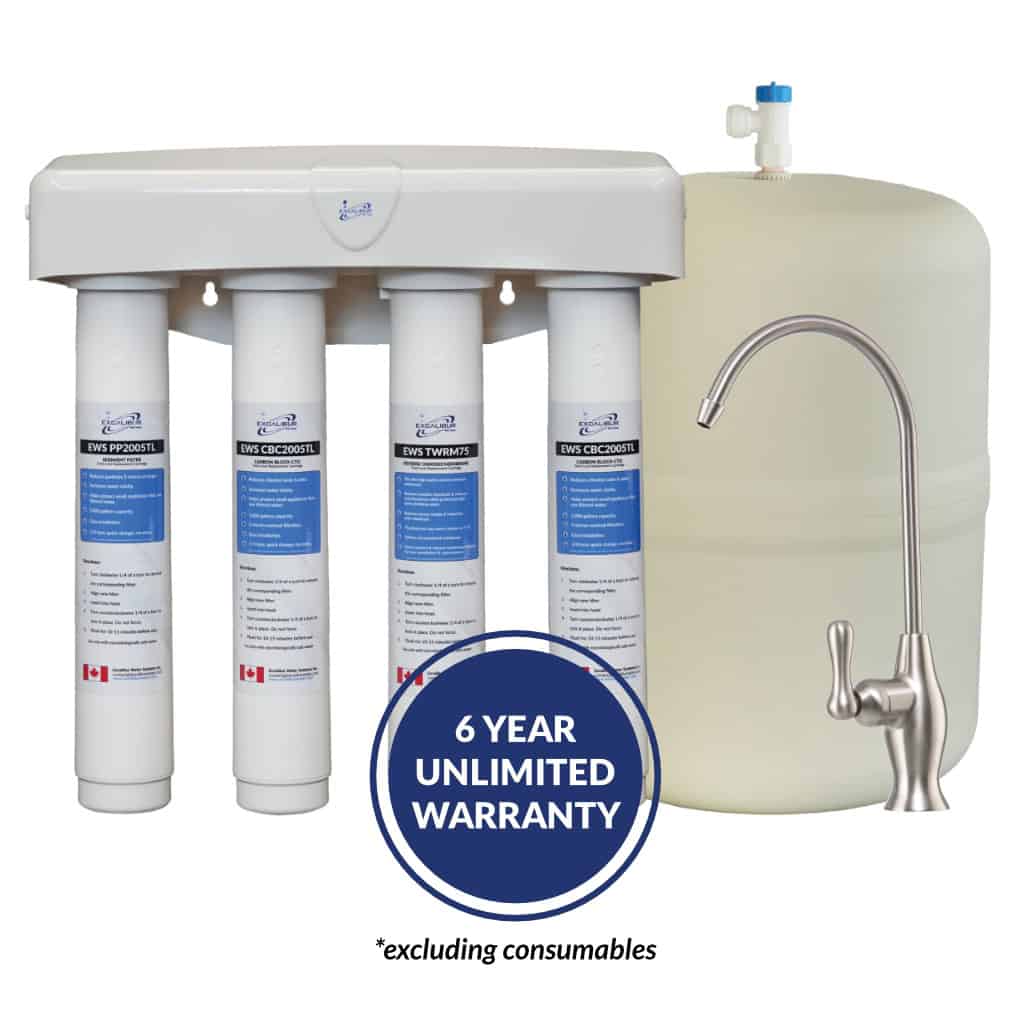
Health Canada points to NSF/ANSI 58 as the standard covering RO systems, and a certified model can reduce total dissolved solids along with specific contaminants such as nitrate, arsenic, or PFAS, provided the certification sheet lists that contaminant by name. Matching the contaminant on your test report to the contaminant on the certification sheet is the step people skip, and it is the one that matters most.
A few practical points worth knowing before you shop:
- RO systems send some water to drain during filtration, so waste ratio and flow rate are worth comparing between models
- Point-of-use installation at the kitchen tap is by far the most common setup for residential RO
- Whole-house RO exists, but the higher cost and larger footprint make it uncommon outside specific industrial or commercial needs
If your water test shows sediment alongside other concerns, it is worth reading our notes on spotting sediment in water before choosing a prefilter configuration.
Which problems each technology actually solves
The simplest way to think about this: a softener treats the whole house for one specific issue (hardness), while RO treats a single tap for a broader range of dissolved contaminants. Matching your actual test results to the right tool avoids paying for capability you don’t need.
- Hardness, scale, spotting, and appliance wear: a softener is the direct fix, whole-house, ongoing.
- Taste, odour, or specific contaminants like nitrate, arsenic, or elevated TDS: RO at the kitchen tap targets these without treating bathwater or laundry water unnecessarily.
- Maintenance load: softeners need periodic salt refills and occasional resin checks; RO needs filter swaps and membrane replacement on a tighter schedule.
- Water waste: softeners use water during regeneration cycles; RO sends a portion of feed water to drain during normal operation, a consideration tied to flow rate.
- Lifespan: a well-maintained softener can run for 10 to 15 years; RO membranes and filters are consumables replaced on their own clock inside a system that otherwise lasts many years.
Why many homes end up using both systems together
Hard water and contaminated water aren’t mutually exclusive, and a lot of households have both problems. When that’s the case, sequencing matters: the softener goes upstream of the RO unit. Hard water left untreated will scale an RO membrane faster than it should, shortening its working life and reducing how well it performs between changes.
Running the systems in that order means:
- The softener strips calcium and magnesium before water ever reaches the membrane
- The RO membrane lasts closer to its expected lifespan instead of fouling early
- Your prefilters last longer too, since they aren’t catching scale on top of sediment and chlorine
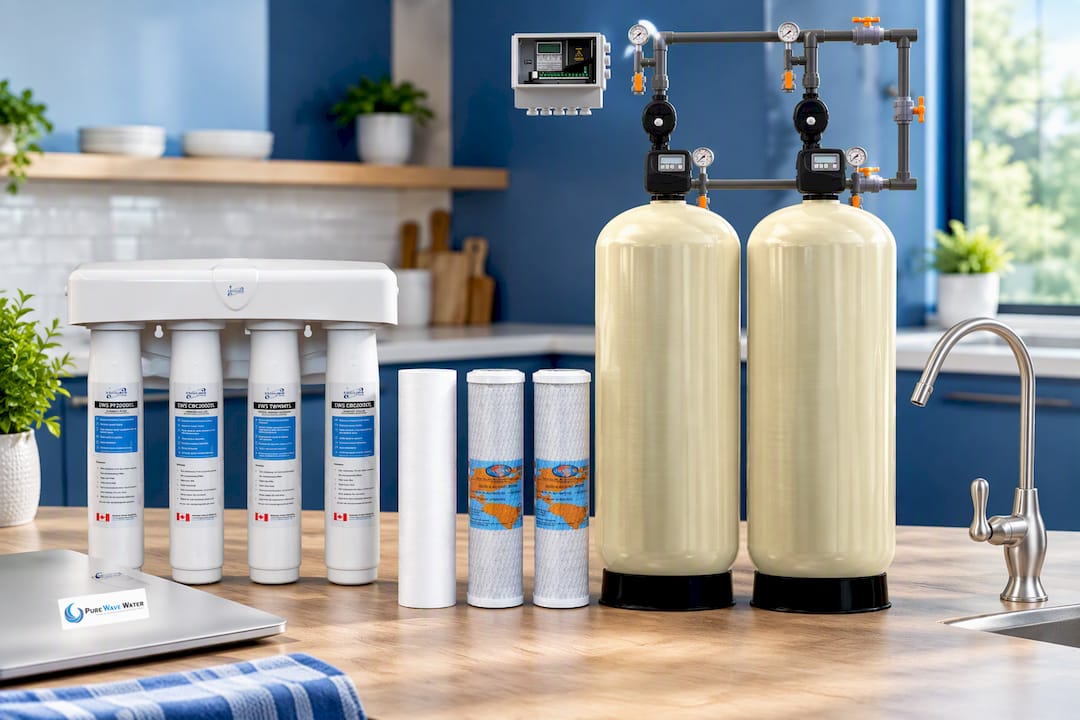
For a straightforward two-fixture household, a softener for whole-house hardness plus a point-of-use RO system at the kitchen sink covers the common bases without the cost and complexity of whole-house RO.
Pro Tip: Test your water after the softener and again after the RO unit to confirm each stage is actually doing its job, not just assuming it is.
What to budget for: upfront cost, maintenance, and lifespan
Upfront pricing depends heavily on capacity, whether you’re treating the whole house or a single tap, and labour for installation. A softener sized for your household’s hardness and water usage costs more than a basic undersized unit, and that sizing decision is worth getting right the first time. RO systems vary by number of filtration stages and membrane quality.
Ongoing costs break down into predictable categories, including routine filter servicing as detailed in on-demand spa filter replacements and chemical balancing services in Sydney:
- Softener salt or potassium chloride, refilled on a regular schedule depending on household water use
- RO prefilters, changed roughly every six to twelve months, and membranes replaced every two to three years
- Occasional service visits to check resin condition, valve function, or system pressure
Professional installation reduces the risk of a system being undersized, improperly vented, or installed in a way that voids the manufacturer’s warranty, which matters more over a 10-to-15-year softener lifespan than it might seem on install day.
Sodium, potassium, and mineral removal: what families should know
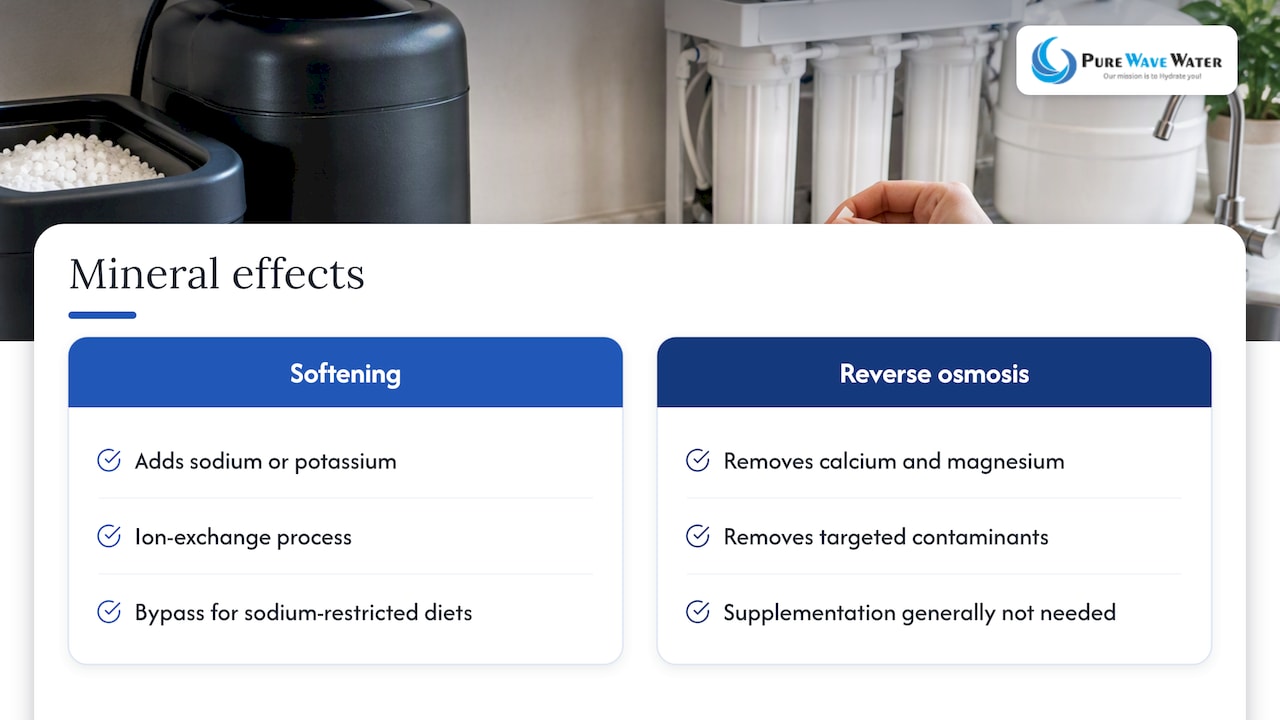
Softening adds sodium or potassium to treated water as part of the ion exchange process, and Health Canada guidance gives example scenarios of how much that can add, recommending a bypass to the kitchen drinking tap for people on sodium-restricted diets or with certain medical conditions. That bypass is a simple plumbing step, not a system redesign.
RO, on the other hand, removes minerals including calcium and magnesium along with the contaminants you’re targeting. Health Canada notes that drinking water is a minor source of dietary minerals for most people, so RO-treated water generally doesn’t require supplementation for a balanced diet. Accredited lab testing before and after treatment confirms both systems are performing as expected for your specific water.
A test-first checklist before you buy anything
Before comparing products, get your water tested. An accredited lab result for hardness (mg/L as calcium carbonate), nitrate, arsenic, TDS, and PFAS where relevant tells you which technology actually applies, rather than guessing from symptoms alone.
- Order a water test covering hardness and any contaminants you suspect, through an accredited lab.
- Ask any supplier for the NSF/ANSI certification number and the model-specific reduction claims, not just a general category label.
- Ask about maintenance schedule, warranty terms, installation scope, and whether a drinking-water bypass is available.
- If hardness is the only issue, a softener solves it; if contaminants or TDS are the issue, RO solves it; if both show up, plan a softener upstream with a point-of-use RO.
Pro Tip: Keep a copy of your test results alongside the certification sheet for any system you buy. That pairing is what proves your treatment matches your actual water.
For a related decision on aging equipment, our piece on repairing versus replacing a softener walks through when testing changes the answer.
Why Pure Wave Water and this guide are worth trusting
We’ve worked with Georgetown and Halton Hills households on water treatment since 1995, which means we’ve seen the full range of hardness and contaminant issues this guide describes play out in real homes. Free in-store water testing is part of how we recommend treatment: we test first, then suggest only what the results support, whether that’s a softener, an RO system, or both. Our technicians handle installation and maintenance for either technology.
The real cost of skipping the test
Buying equipment before testing is the single most common mistake we see, and it usually ends with a system that either does nothing for the actual problem or does more than necessary. Hardness and contaminants are different problems with different fixes. Spending ten minutes on a water test before spending money on equipment protects both your plumbing and your drinking water.
— CloudSprout16
Start with a free water test
The clearest way to know whether you need a softener, an RO system, or both is to test your water, and we offer that free in-store, with straightforward recommendations based on what the results actually show. Technicians handle installation and maintenance for the systems your water calls for.
A few places to start:
- Book a free water test or ask about maintenance and installation services
- Review the Sureflo® Preferred Reverse Osmosis System for point-of-use contaminant reduction
- Check Reverse Osmosis 3 Pack Filters for scheduled replacements
- See the 75K Progressive Duplex Water Softener for whole-house hardness control
- Browse our full shop for filters, media, and treatment supplies
FAQ
Will a reverse osmosis system soften water?
RO reduces calcium and magnesium along with other dissolved substances, so it does lower hardness at the point of use. It isn’t a whole-house fix the way a dedicated softener is, since RO only treats water at the connected tap.
What is the best under sink water filter?
The right under-sink system depends on what your water test shows: an RO system handles a broad range of contaminants and TDS reduction, while a simpler carbon filter may suit taste or chlorine concerns alone. Checking the model’s NSF/ANSI 58 certification against your specific contaminants is the deciding factor, not the product category.
What are the disadvantages of water purifiers?
Reverse osmosis systems use some water during filtration and need regular filter and membrane changes to keep performing as certified. Softeners require ongoing salt or potassium refills and periodic resin checks, so both technologies carry a maintenance routine rather than a one-time purchase.
Which is better for you, reverse osmosis or distilled water?
RO and distillation both reduce dissolved minerals and many contaminants, but RO is far more practical at home since it runs continuously at the tap rather than requiring a batch process. For most households, a certified RO system under the sink gives comparable water quality with far less effort.
Sources
Recommended

Pure Wave Water shares educational content about water treatment, water softeners, reverse osmosis systems, UV purification, and filtration solutions. Our guides help readers understand water quality concerns, explore treatment options, and make informed decisions about their water treatment needs.