Nitrate in a private well is a quiet problem: you cannot see, smell or taste it, and only a chemical lab test will tell you whether your water is within the Health Canada limit. If you drink from a well in rural Halton Hills, Caledon or Erin, especially near farmland or a septic system, the sensible first step is a lab nitrate test. If the result is high, the usual fix is a reverse osmosis system at the kitchen tap, or anion exchange when you need whole-home treatment, paired with repairs to whatever is letting nitrate in.
This guide explains what the numbers mean, who needs to act first, what works (and what does not), and how we approach it at Pure Wave Water in Georgetown.
TL;DR
- Health Canada’s maximum acceptable concentration for nitrate is 45 mg/L as nitrate, which is the same as 10 mg/L as nitrate-nitrogen. Check which unit your lab report uses.
- Infants under six months are most at risk, so any household with a baby or a pregnancy should test before using well water for formula.
- Boiling does not remove nitrate. It concentrates it.
- Nitrate needs a private licensed lab. The free public health bacteria test is a separate test and does not cover it.
- Reverse osmosis at the kitchen tap or anion exchange for the whole house can treat it. UV treats bacteria, not nitrate. Fix the source too.
Table of Contents
- What nitrate is and why wells in farm country are exposed
- The safe limit for nitrate in drinking water
- Who is most at risk
- Why boiling makes it worse
- How to test: a lab, not a free bacteria kit
- What actually removes nitrate
- Treat the water, then fix the source
- Our perspective: test, treat what is needed, keep it running
- Get an RO quote and extended testing
- FAQ
- Sources
What nitrate is and why wells in farm country are exposed
Nitrate is a form of nitrogen that dissolves easily in water. It is essential for plant growth and is often added to soil as fertilizer, and because it is so soluble it does not bind to soil, so rain or irrigation carries it down toward groundwater. Other common sources are manure storage and wastewater from septic systems.
That is why the risk pattern is local. A drilled or dug well close to cropland, a livestock yard, a manure pile or an ageing septic bed is more exposed than one on a large, well-separated lot. A shallow well, a cracked casing or a poorly sealed well cap makes it easier for surface water to reach what you drink.
Neighbours are not a guide. Two wells a few hundred metres apart can test very differently, depending on depth, construction and what sits uphill. Your own result is the only one that counts.
The safe limit for nitrate in drinking water
The Canadian guideline is straightforward. Health Canada sets the maximum acceptable concentration at 45 mg/L, equivalent to 10 mg/L measured as nitrate-nitrogen.
The two numbers describe the same water. They only differ in how the lab expresses the result.
| Lab reports it as | Health Canada maximum |
|---|---|
| Nitrate (NO3) | 45 mg/L |
| Nitrate-nitrogen (NO3-N) | 10 mg/L |
This trips people up. A report showing “12 mg/L” could be fine if it is nitrate, and over the limit if it is nitrate-nitrogen. Read the unit on the line before you read the number, and ask the lab if it is unclear.
Who is most at risk
The concern with nitrate is methemoglobinemia, often called blue baby syndrome. Levels above the guideline are associated with it, particularly in infants under six months old. Older children and adults generally do not show the same acute sensitivity at similar concentrations, which is exactly why households with babies should not wait.
If you are expecting, have a newborn, or mix infant formula with tap water, test first. If a result is above the limit, do not use that water for formula and talk to your family doctor or public health unit about your baby. If an infant has bluish skin, especially around the lips, or breathing difficulty, seek urgent medical care.
Livestock can be affected too. If animals drink from the same well, mention that to your veterinarian and your lab.
Why boiling makes it worse
This is the most common mistake we hear about, because boiling is the right response to a bacteria problem. With nitrate, boiling removes only water as steam and leaves the nitrate behind, so the remaining water is more concentrated.
If your concern is coliform, boiling is still the correct short-term step, and we cover that in our guide to coliform in well water. Just do not apply the same logic to nitrate.
How to test: a lab, not a free bacteria kit
Many Ontario well owners are used to dropping off bottles for the free bacteria test through public health. That test is valuable, but it is a separate test. As the provincial guidance explains, public health units test for bacteria, and chemical testing goes to a licensed private laboratory. The province publishes a list of licensed laboratories. Contact the lab before you collect a sample, since they set the bottle and handling rules.
A practical testing routine:
- Ask the lab for a nitrate (and nitrite) analysis, and confirm which unit they report in.
- Collect the sample exactly as the lab instructs, from a tap that represents the water you drink, and return it promptly.
- Keep the report. Compare it with 45 mg/L as nitrate or 10 mg/L as nitrate-nitrogen.
- Retest on a schedule. Nitrate can rise after heavy rain, spring thaw or fertilizer application, so a single result in a dry month may not tell the whole story. Our page on fall well water testing in Ontario explains how we think about seasonal sampling.
Bring your lab report to us and we will go through it with you. We also offer free in-store water testing for hardness, iron and other water-quality concerns, which helps us size equipment correctly, and we can arrange extended testing. Free in-store checks are not a substitute for a licensed-lab nitrate result, and we will say so plainly.
What actually removes nitrate
Nitrate is a dissolved ion, so filters that catch particles do not remove it. Two approaches are widely recommended. Reverse osmosis at the tap and anion exchange for whole-home use are the effective options. The CDC also lists distillation, though it is slow and impractical for a household’s daily volume.
| Option | Where it treats | Best for | Watch points |
|---|---|---|---|
| Reverse osmosis | One tap, usually the kitchen | Drinking, cooking, infant formula | Only treats that tap; membrane and filters need scheduled replacement |
| Anion exchange | Whole house | Households wanting treated water everywhere | Resin must be regenerated; needs monitoring |
| Distillation | Countertop batches | Small volumes | Slow, energy use, not practical for a family |
Reverse osmosis at the kitchen tap
For most households, this is the right answer. You only drink and cook with a small share of your water, so treating that share is efficient. An RO system pushes water through a semi-permeable membrane that rejects nitrate ions. The treated water goes to a dedicated tap, usually at the kitchen sink.
Two cautions from the engineering side. First, RO performance can be significantly affected when nitrate is above about 30 mg/L, so a high lab result should be discussed with us before you buy. Second, RO needs reasonable inlet pressure to work well. If your system struggles, start with troubleshooting low water pressure before blaming the membrane.
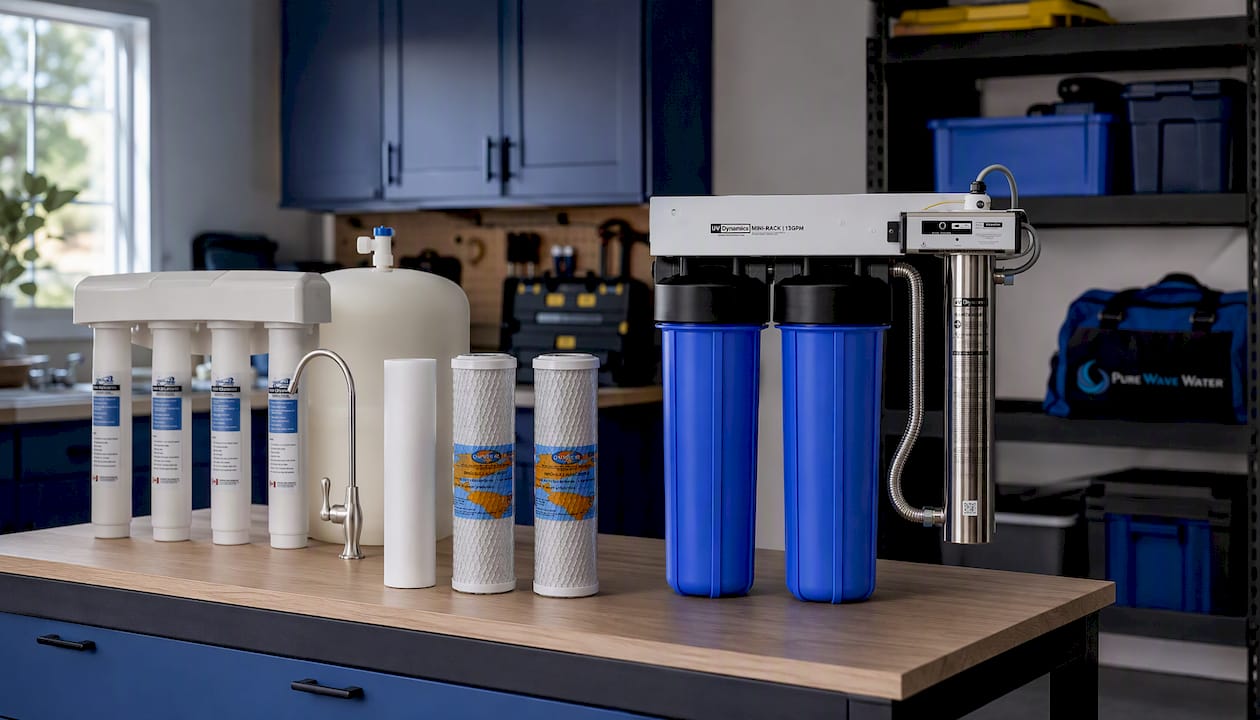
After installation, test the treated water. A system that is not verified is only a hopeful assumption. If you want to see what is involved, read about reverse osmosis installation, or browse a unit such as the Sureflo Preferred Reverse Osmosis System. Replacement cartridges are available as a reverse osmosis 3 pack of filters.
Anion exchange for the whole house
Anion exchange resin swaps chloride for nitrate. It makes sense when you want treated water at every tap, for example when bathing infants or when livestock or a business share the supply. It is more demanding to run. Practitioners note that resin can become exhausted and, once at capacity, may release trapped nitrate back into the water. How often it must regenerate depends on the total ionic load in your water, including sulfate, so a full water analysis matters, not just the nitrate line.
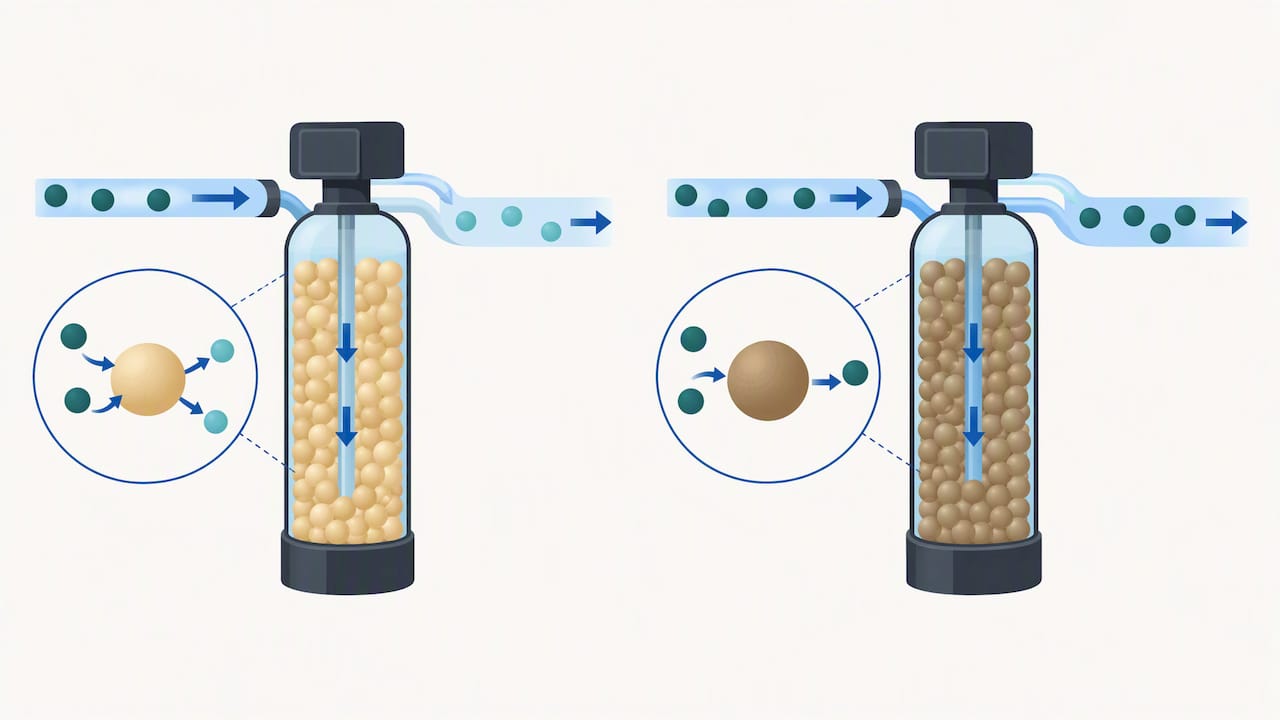
That means monitoring: periodic testing of treated water, and a regeneration schedule matched to your chemistry.
What does not solve nitrate
- UV. Ultraviolet disinfection is for bacteria and some other microorganisms. It does nothing to dissolved nitrate. If you have both problems, you need both treatments.
- Boiling. It concentrates nitrate, as above.
- Sediment and general carbon filters. They address particles, taste and odour, not nitrate.
If your water also has other complaints, treat them on their own terms. Brownish water from a different cause may be manganese or something organic. We have a guide on manganese in well water. People searching for tannins in well water are usually describing a tea-coloured tint, and that is a separate diagnosis from nitrate. Test for each, because treatment for one does not fix the other.
Treat the water, then fix the source
A treatment system protects what comes out of the tap. It does not stop nitrate entering the well. Provincial guidance treats treatment as a long-term measure alongside physical checks on the well and its separation from contamination sources.
A sensible site checklist:
- Inspect the well cap and casing for cracks, gaps or damage, and confirm the cap is tight.
- Check that the ground slopes away from the wellhead so water does not pond around it.
- Look at the distances between the well and the septic bed, manure storage, fuel tanks and fertilized fields.
- Have a licensed well contractor assess the construction if the well is old, shallow or dug.
- Ask a licensed septic professional to inspect and pump the system if it is close to the well or has not been serviced.
Minimum separation distances for new wells are requirements of the Wells Regulation and the Ontario Building Code. An older well may not meet them, which is worth knowing even if you cannot move it.
Our perspective: test, treat what is needed, keep it running
We have served Georgetown and the surrounding area since 1995, and the pattern with nitrate is consistent. Well owners often come in worried about smell or staining, when the contaminant with the real health implications is the one they cannot detect. So our advice is deliberately plain.
We start with the lab report, because nitrate is not something a quick in-store check can settle. Then we recommend only what the water needs. For many families that is a single RO system at the kitchen tap, with the lab result confirming it is within RO’s comfortable range. If the result is high, or if you want whole-home treatment, we talk through anion exchange and the monitoring it demands, so there are no surprises later.
We install and service systems with our own technicians, including most major brands, give written quotes, and support the consumables afterwards. With RO, the membrane and filters are what keep the system working, so the ongoing part matters as much as the installation day. And we will always say if the better first move is a well repair rather than a purchase.
— CloudSprout16
Get an RO quote and extended testing
If your lab result is near or above the limit, or you have a baby in the house and want certainty, we can quote a reverse osmosis system and install it. You can also ask about extended testing so equipment is matched to your whole water profile, not one number. Start at our free water test page. You can also browse the online shop, see our installation and repair services, or visit us at 333 Mountainview Rd S, Georgetown, or call 905-702-2700.
FAQ
What is a safe level of nitrate in well water in Canada?
The Health Canada maximum acceptable concentration is 45 mg/L as nitrate, or 10 mg/L as nitrate-nitrogen. Both figures describe the same level, so check which unit your lab used. Below the limit is considered acceptable for drinking, but retest periodically if your well sits near farmland or a septic system.
Can I tell if my well water has nitrates by taste or smell?
No. Nitrate has no colour, taste or smell, so the only way to know is a chemical test through a licensed laboratory. The free public health bacteria test does not include it. If you have a baby at home, test before you use the water for formula.
Does boiling or a basic filter remove nitrate?
No. Boiling evaporates water and leaves nitrate behind, so the concentration rises. Sediment and general carbon filters and UV lights are not nitrate treatments. Reverse osmosis at the tap or anion exchange for the whole house are the proven approaches.
Is it safe to shower in water with high nitrate?
The health concern with nitrate is swallowing it, particularly for infants, rather than skin contact. Even so, ask your public health unit or doctor about your own circumstances if your result is high, and use treated water for drinking, cooking and formula in the meantime.
Sources
- Health Canada: Guideline Technical Document, Nitrate and Nitrite
- OMAFRA: Testing and Treating Private Water Wells (Groundwater Series)
- Ontario: List of Licensed Laboratories
- Ohio Department of Health: Nitrate Treatment
- University of Washington: Overview of Drinking Water Treatment for Nitrate
- CDC: Chemicals That Can Contaminate Tap Water
Recommended

Pure Wave Water shares educational content about water treatment, water softeners, reverse osmosis systems, UV purification, and filtration solutions. Our guides help readers understand water quality concerns, explore treatment options, and make informed decisions about their water treatment needs.