A fully installed water softener in Ontario typically runs $1,500 to $4,800, with most homes landing between $2,000 and $3,500. The quick rule: buy if you’re staying put for seven years or more, rent if you expect to move sooner. Before you commit either way, a free hardness test tells you what size and type you actually need.
TL;DR:
- Renting at $25 per month can reach breakeven around year 7 or 8; choose it when flexibility and bundled maintenance justify the added lifetime cost.
- A same spot replacement usually takes 3 to 5 hours at $90 to $150 per hour, while new drain or electrical work raises the quote.
- Budget $100 to $250 yearly for salt and upkeep; metered regeneration uses less salt and water than timer based controls.
- Test hardness and iron before choosing a system, especially on a private well, where levels can vary between nearby properties.
- Ask for an itemized written quote covering equipment, labor, and plumbing additions, and confirm whether local permits apply to new drain lines.
Table of Contents
- Cost breakdown: unit prices, installation labour, and add-ons
- Buying vs renting: what the numbers actually show
- What installers charge for, and how to keep quotes comparable
- Annual running costs: salt, maintenance, and what to budget yearly
- How to tell if your Ontario home actually needs a softener
- Local testing, installation, and product options we offer
- The typical timeline from first call to running water
- Financing and payment options for Ontario homeowners
- Permits and code requirements for installing a softener in Ontario
- Our take on budgeting for a softener the right way
- Get a free test and a written quote from our team
- FAQ
- Sources
Cost breakdown: unit prices, installation labour, and add-ons
Your total bill has two separate pieces: the softener itself, and the work to connect it to your plumbing. Unit prices in Canada generally fall into three bands. Entry-level single-tank units, like those found at big-box retailers, typically range from a few hundred to under $1,000. Mid-range units with metered, demand-initiated regeneration generally cost between about $1,000 and $2,000. Premium or dual-tank systems from dealers, including heavier-duty models for well water or larger households, usually cost more.
Installation labour is the variable that surprises most homeowners. A straightforward swap of an existing unit, plumbed into the same spot, usually takes 3 to 5 hours at $90 to $150 per hour in most Ontario markets. A first-time install, especially one needing a new drain line, extra shutoff valves, or electrical work for a metered control valve, can push the job well past that range.
A few add-ons shape the final number:
- Resin tank upgrades or extra media for iron removal add cost but improve performance on well water.
- A new drain run, when there’s no floor drain nearby, often adds $200 to $600 in plumbing work.
- A bypass valve lets you service the softener without shutting off household water entirely.
- Electrical work for a metered valve’s power supply may require a licensed electrician.
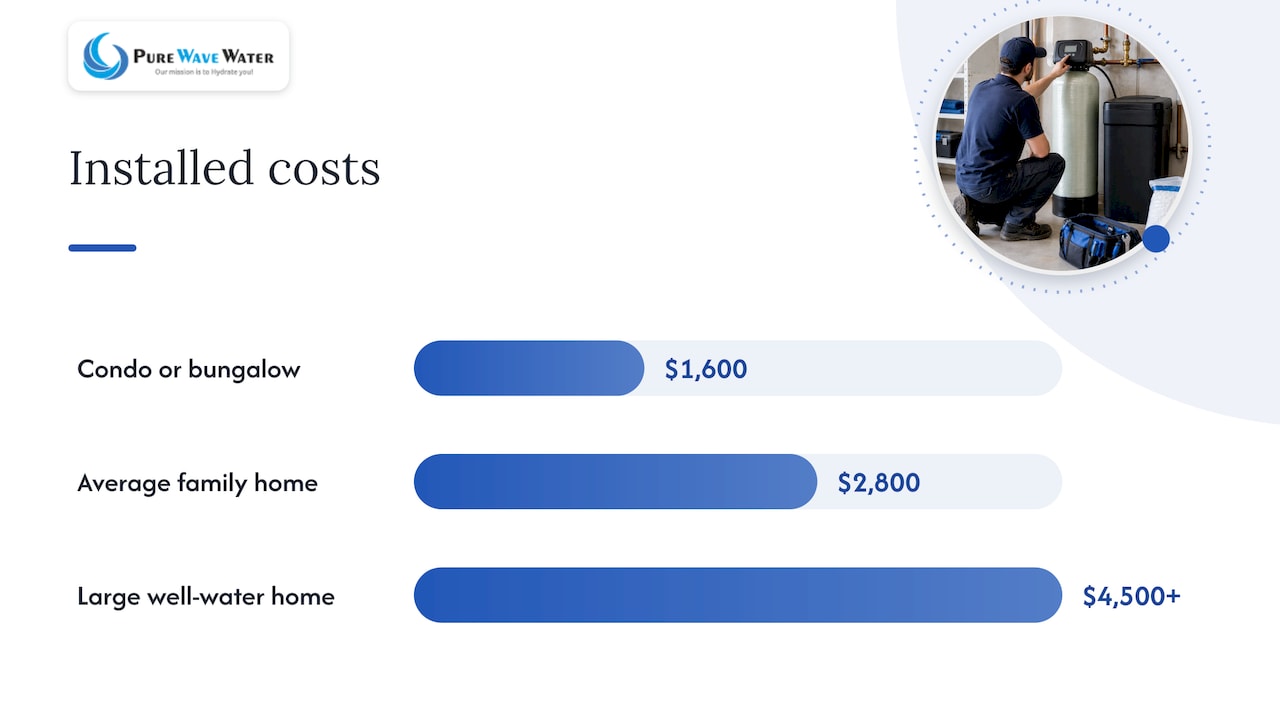
For context: a small condo or bungalow swap might land near $1,600 installed. An average family home with a new install and minor plumbing work often lands closer to $2,800. A large home on well water, needing iron pre-treatment and a dedicated drain line, can reach $4,500 or more.
Buying vs renting: what the numbers actually show
Renting avoids the upfront cost but adds up over time, often faster than homeowners expect. Breakeven on a purchase typically lands between 7 and 13 years depending on the rental rate, with a $25-per-month plan breaking even around year 7 or 8.
Rental plans often bundle salt delivery and maintenance calls, which has real value if you’d rather not think about the system at all. That convenience is baked into the monthly price, though, so read the contract for cancellation fees or buyout clauses before signing.
If you plan to stay in your home long-term, want equity in the equipment, or are selling in the next few years and want a system that adds resale value, buying tends to win. If you’re renting your home, unsure how long you’ll stay, or want zero maintenance responsibility, renting can make more sense despite the higher lifetime cost.
What installers charge for, and how to keep quotes comparable
Two quotes for the “same” softener can differ by hundreds of dollars once you account for site conditions. Here’s what typically drives the gap:
- A finished basement with limited access adds labour time for manoeuvring the unit and running lines.
- No existing floor drain near the install site means adding drain plumbing, often the single biggest line-item surprise.
- A metered control valve may need its own electrical outlet, requiring an electrician on top of the plumber.
- Hard-to-reach shutoff valves or old, corroded fittings add time before the actual install even starts.
Plumbers in Ontario commonly charge $90 to $150 per hour, with a simple swap taking 3 to 5 hours and a first-time install taking longer. Ontario’s Building Code Act governs plumbing work, and a licensed installer helps you stay compliant and keeps any future insurance claim on solid ground if water damage ever occurs.
Pro Tip: Ask every quote to itemize unit price, labour hours, and add-ons separately, so you’re comparing real work, not just a bottom-line number.
Annual running costs: salt, maintenance, and what to budget yearly
The sticker price is only part of the real cost. A typical family uses 6 to 12 bags of 20 kg salt per year, depending on water hardness and household use.
- Salt runs roughly $15 to $25 per 20 kg bag at most Canadian retailers.
- Annual maintenance or parts replacement, including resin or valve checks, often adds another $50 to $150 per year.
- A demand-initiated (metered) valve reduces salt and water use compared to a timer-based system, lowering operating cost over several years.
A typical household spends $100 to $250 a year on salt and upkeep combined, which over a 5- to 10-year ownership period adds $500 to $2,500 on top of the installed price, according to cost breakdowns for Ontario systems. Choosing the right salt for your system also affects how efficiently it regenerates and how much you’ll buy over time.
How to tell if your Ontario home actually needs a softener
Hard water leaves clues before it shows up on a water bill. Watch for white scale on faucets and showerheads, soap that won’t lather properly, filmy residue on dishes, and fixtures that discolour faster than they should.
Water hardness varies a lot across the province. Homes on lake-supplied municipal water in Toronto and Ottawa tend to have softer water, while areas drawing from groundwater, including Kitchener-Waterloo, London, Hamilton, Barrie, Cambridge, and Guelph, commonly report harder water. If you’re on a private well, testing matters even more, since hardness can vary from one property to the next even in the same neighbourhood. A quick hardness test, paired with a look at limescale buildup and a check for sediment that mimics hardness symptoms, tells you exactly what you’re dealing with before you spend a dollar.
Local testing, installation, and product options we offer
Our approach typically starts with a free in-store test for hardness, iron, and related water-quality concerns, so you know your actual numbers before buying anything.
Professional technicians typically handle installation, repair, and ongoing maintenance, whether you’re replacing an aging unit or starting from scratch.
- The Windsor Pure Natural Water Softener Salt suits households with straightforward hardness and no iron concerns.
- The Windsor Clean & Protect Water Softener Salt is built for homes dealing with iron staining alongside hardness.
- The 75K Progressive Duplex Water Softener fits larger households or well-water homes needing continuous soft water with no interruption during regeneration.
The typical timeline from first call to running water
Most Ontario installs follow a predictable sequence, and knowing it ahead of time helps you plan around it instead of being surprised by it.
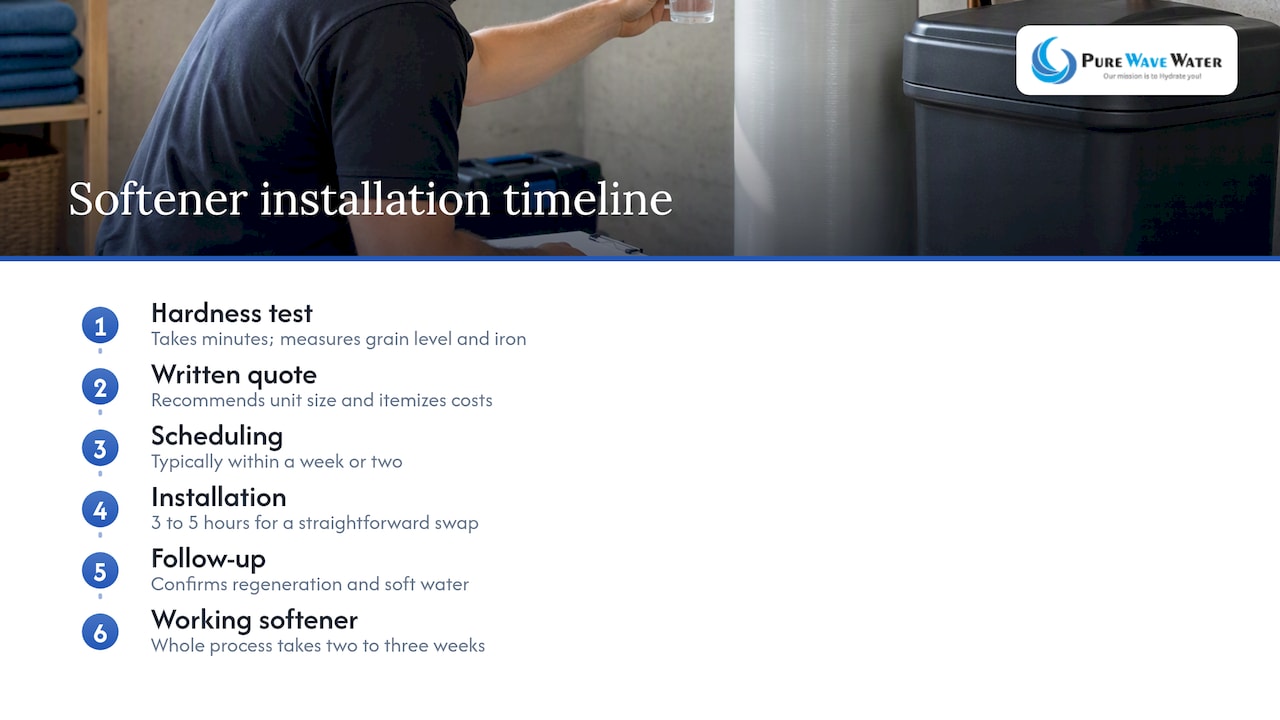
It usually starts with a hardness test, either a quick in-store sample or an at-home kit, which takes minutes and tells you what grain level and iron concentration you’re dealing with. From there, a technician or dealer reviews your results and recommends a unit size based on household size, water use, and hardness, then provides a written quote itemizing unit, labour, and any plumbing add-ons.
Scheduling typically happens within a week or two, depending on installer availability and whether parts need ordering. Installation day itself is usually a single visit: 3 to 5 hours for a straightforward swap, longer if new drain lines or electrical work are needed. The installer tests the system on-site, sets regeneration timing or confirms the metered valve is reading correctly, and walks you through salt loading and basic upkeep.
A short follow-up, either a call or a return visit, confirms the system is regenerating properly and your water tests soft. Most homeowners see the whole process, from first test to working softener, completed within two to three weeks.
Financing and payment options for Ontario homeowners
Most Ontario dealers offer a few ways to spread out the cost of a softener beyond a single upfront payment. Many retailers and local installers provide in-house payment plans, splitting the installed cost over several months with no interest if paid within a set window. Some offer longer-term financing through third-party consumer lenders, which spreads payments further but usually includes interest charges, so comparing the total repayment amount matters more than the monthly figure alone.
Renting, covered earlier, is itself a financing alternative: it avoids any upfront cost entirely in exchange for a fixed monthly fee, though it costs more over a long ownership period. Home improvement lines of credit, where available, are another option some homeowners use for larger installs that include extra plumbing work.
Whichever option you consider, ask for the total cost over the full term, not just the monthly number, and confirm whether early payoff carries any penalty. A written quote that separates equipment, labour, and financing terms makes it far easier to compare one offer against another.
Permits and code requirements for installing a softener in Ontario
Water softener installation in Ontario falls under provincial plumbing rules set out in the Building Code Act, which governs how plumbing work is performed and enforced across the province. Municipalities administer permits and inspections locally, and some jurisdictions require a permit for new drain lines or significant plumbing changes, even when the softener itself doesn’t need one.
A licensed installer typically knows which local rules apply and pulls any required permit as part of the job, which matters beyond just compliance. Non-compliant DIY plumbing work can create problems with an insurance claim if water damage occurs later, since insurers may ask whether the work met code. Using a licensed professional for anything beyond a simple unit swap is the more reliable way to avoid that risk.
Our take on budgeting for a softener the right way
Testing before buying sounds obvious, but most households skip it and end up with a system sized for a problem they don’t actually have. A proper quote, backed by real hardness numbers and a code-compliant install, almost always costs less over time than guessing.
— CloudSprout16
Get a free test and a written quote from our team
If you’re trying to budget this properly, start with a free hardness and iron test rather than guessing at a unit size. From there, a written quote can cover equipment, labour, and any plumbing work your home actually needs.
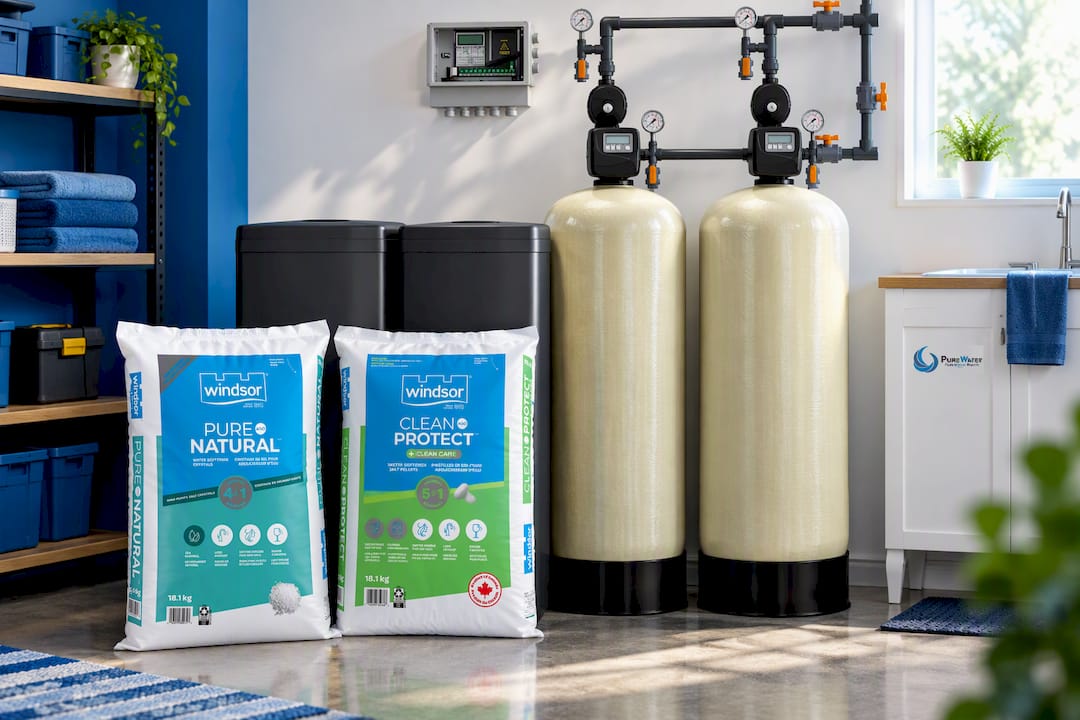
Technicians handle installation and repair on various softeners, and the shop carries softener salt, replacement filters, and parts for ongoing upkeep once your system is running.
FAQ
How much does it cost to install a water softener in Ontario?
Most Ontario homes pay between $2,000 and $3,500 installed, covering the unit, labour, and basic plumbing connections. Larger homes, well-water properties, or installs needing new drain lines or electrical work can push the total toward $4,800.
What are common water softener problems?
The most frequent issues are salt bridging (a hardened crust that stops salt from dissolving), resin bed fouling from iron or sediment, and a control valve that fails to regenerate on schedule. Regular maintenance and the right salt type for your water conditions prevent most of these.
Can I install a water softener myself?
A straightforward swap of an identical unit is sometimes within reach for an experienced DIYer, but new plumbing, drain lines, or electrical connections fall under Ontario’s plumbing code requirements. Non-compliant work can complicate an insurance claim later, so a licensed installer is the safer route for anything beyond a basic swap.
Where can I find the cheapest softener salt?
Pricing on 20 kg bags of water softener salt in Canada typically runs $15 to $25, with variation by brand and local retailer. Choosing the right salt type for your specific system, rather than just the cheapest bag, affects how efficiently your softener regenerates over time.
Sources
- Water Softener Cost Ontario: Is It Worth It for Hard Water? | Get a Better Quote
- Cost to Replace a Water Softener in Canada 2026 – HomeStars
- Ontario
Recommended

Pure Wave Water shares educational content about water treatment, water softeners, reverse osmosis systems, UV purification, and filtration solutions. Our guides help readers understand water quality concerns, explore treatment options, and make informed decisions about their water treatment needs.